October 30, 2026
8 Cold Outreach Email Examples Worth Copying in 2026
Most cold outreach email advice still sounds like this: drop in a first name, mention the company, and ask for 15 minutes. I think that line is why so many notes die in the preview pane. A 2024 global analysis of 7.2 billion emails reported that 90% were categorized as spam, including unsolicited, unwanted, or malicious messages, as covered by Help Net Security. Your note is sitting in that pile. Buyers decide before line two.
The eight patterns below still earn replies because each one does a different job. One hangs on a live event. One names a costly mess. One quits on purpose. None of them is a script for 400 inboxes. Read each as a tactic: the opening line, what the follow-up is allowed to do, a verdict, and a one-line test for your own list.
If the sentence could go to any sales leader in the segment, delete it. Specific beats clever. A reply you can disqualify beats a meeting with someone who never had the problem.
Table of Contents
- 1. Trigger-Based Personalized Opener
- 2. Problem-Agitate-Solve (PAS) Email
- 3. Breakup Email (Last-Touch Email)
- 4. Quick-Question Email
- 5. Social Proof and Case-Study Email
- 6. Referral and Mutual-Connection Email
- 7. Personalized Video Email
- 8. Value-First Resource Email
- How the eight cold outreach email approaches compare
- Pick One Template, Test It, and Let the Replies Decide
1. Trigger-Based Personalized Opener
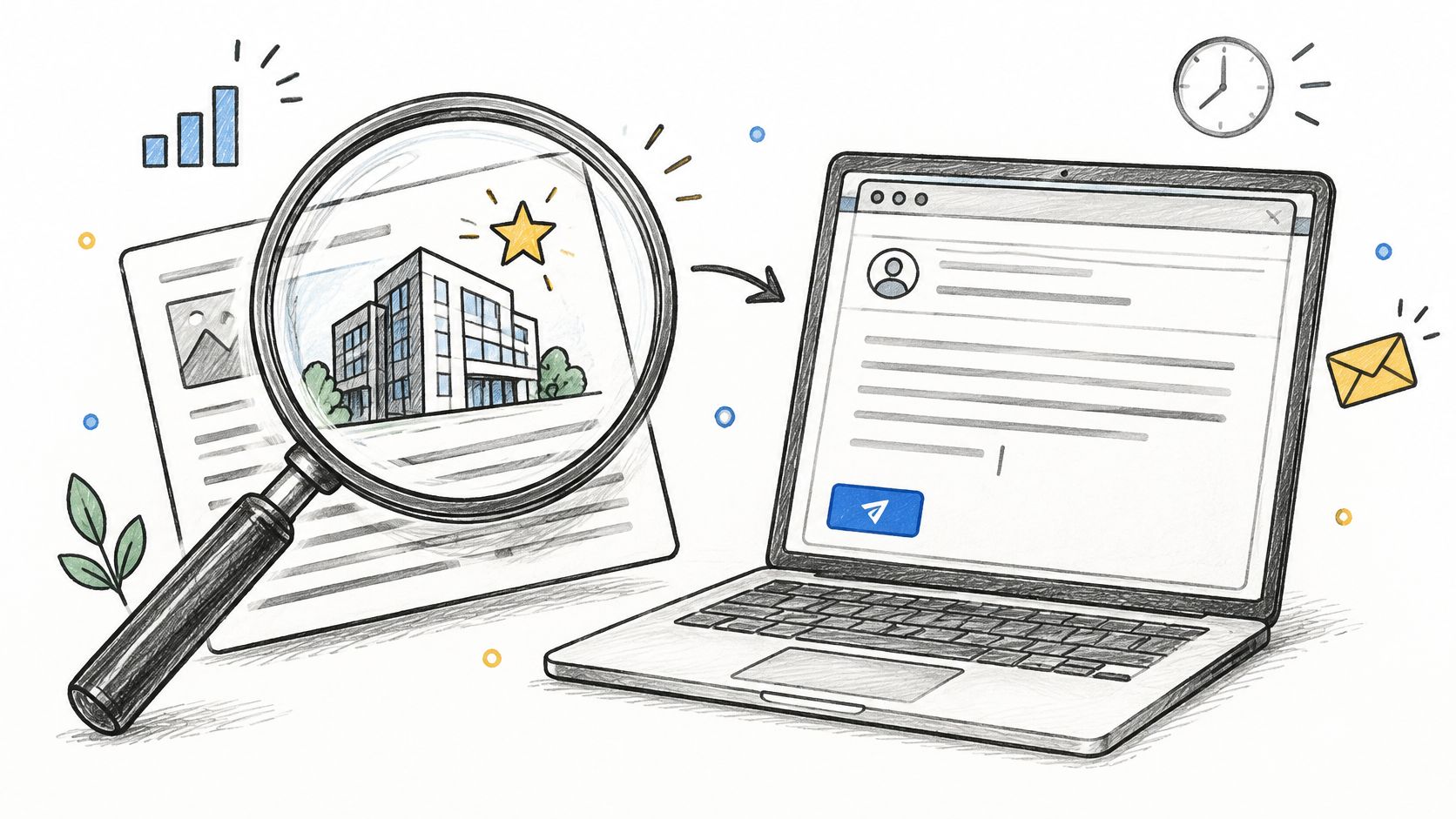
Opening line: "Saw you're hiring three SDRs this quarter. Teams ramping that fast usually find their outbound volume outpaces their list quality."
Use a funding note, a careers page, a changelog, or a leadership hire you can verify today, then stop digging. Random biography reads like a stakeout. DevCommX reports that 73% of B2B buyers actively avoid suppliers that send irrelevant outreach, and 61% prefer a rep-free buying experience. The trigger has to justify itself without a product tour.
What the next touch may do
Follow-up one repeats the event and the operational snag. Follow-up two is a binary: compare notes, or you will leave it. If the news is stale, the thread feels like fake familiarity.
Practical rule: one or two sentences of context, then one ask. A compliment with no cost gets deleted.
Say a cybersecurity firm just posted for a revenue lead. Skip "love the mission." Say outbound quality usually slips right after that hire. Spin safe wording with our spintax generator so the pattern does not look cloned. Before you lock a style, compare email personalization approaches.
Verdict: it works when the event is current and tied to a problem they already own. It fails when the Series A is only a compliment glued to an unrelated pitch.
One-line test: same body, 30 accounts, swap only the trigger sentence.
2. Problem-Agitate-Solve (PAS) Email
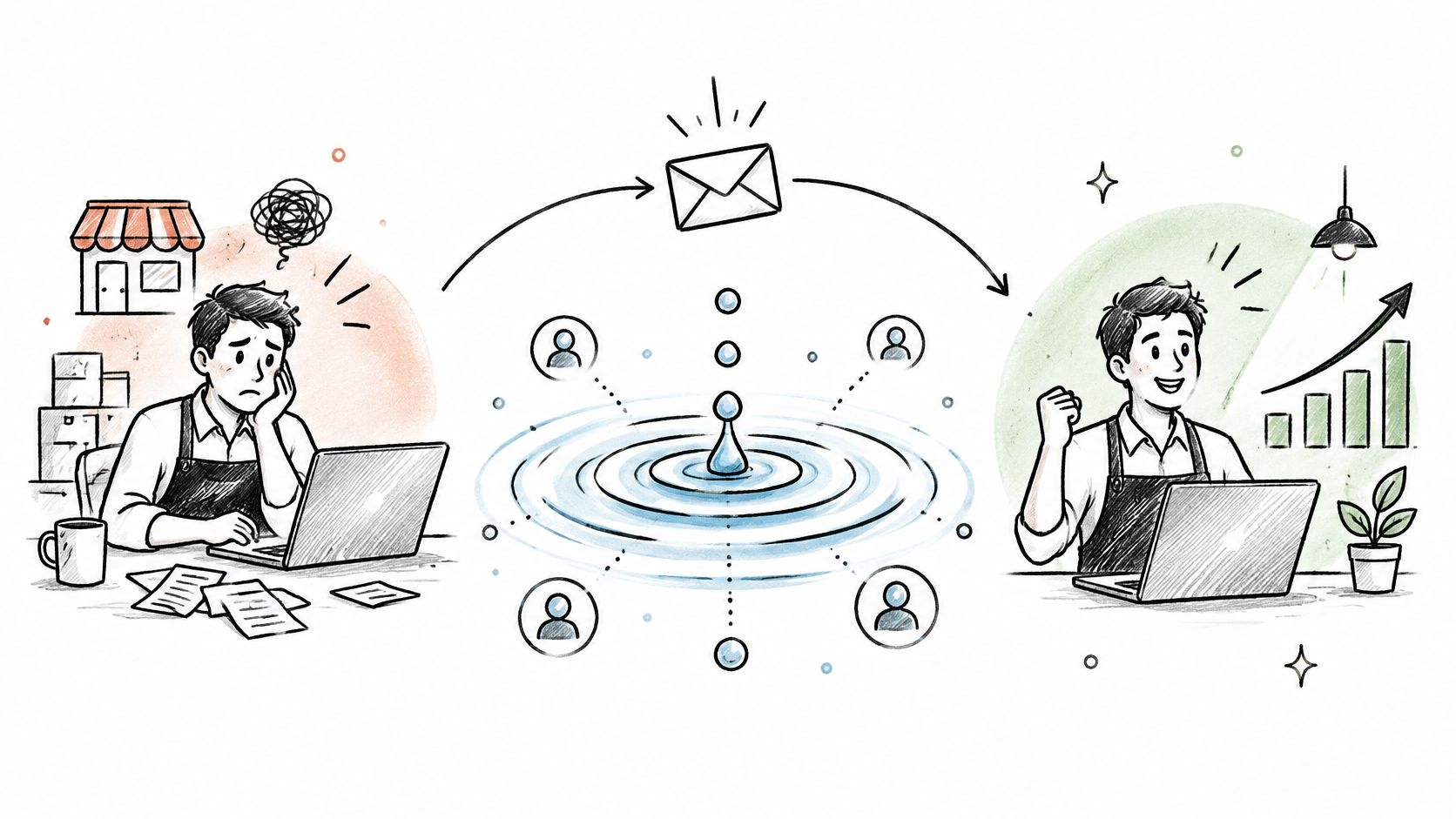
Name the mess in their words, spend one sentence on the cost, then offer a narrow fix. That is the whole cold outreach email.
Opening line: "Your SDRs are spending most of their day on lead research."
Agitate once: every hour in research is an hour off the phone, and reps without a pipeline plan miss the quarter. Solve in one line: verified lists and sequences so the team books meetings instead of hunting rows.
A field experiment of 5,187 emails reported a 15% average response rate, and messages under 150 words with early sender identification moved one condition from 17% to 44%, per the Journal of Businesses write-up. Treat that jump as experiment-specific. I still keep the body under 90 words and say who is writing in the first two lines.
Follow-up without a second sermon
Touch two changes the cost, not the product list. Touch three asks if the problem is even theirs. Piling features into the agitate step is how PAS turns into a brochure.
Run the draft through our email deliverability checker before you blame the copy. A sharp problem line in spam is still a miss.
Verdict: it works when the problem shows up in their job posts. It fails when you agitate a pain they do not have, which feels like a scare tactic.
One-line test: A/B the problem sentence only, and score positive replies, not opens.
3. Breakup Email (Last-Touch Email)
Opening line: "I haven't heard back, so I'll assume the timing isn't right and close out your file."
Offer one exit that still helps you: "If someone else owns this, point me their way." Then stop. Three or four sentences. No new case study, no guilt.
An analysis of 12 million emails found the first message at an 8.5% reply rate, 14.1% after two attempts, and 17.1% after three, so follow-ups added 8.6 percentage points, according to Outreach Bloom. That is why I place the breakup on touch three or four, not on touch one and not after a seventh nudge. Count positive replies separately from auto-replies and unsubscribes, or the last touch will look smarter than it is.
How to log the silence
- Stop the thread: suppress the contact the day you send the close-out.
- Ask for a name: a referral is a win even when they never take the call.
- Reopen only on a new trigger: a hire, a launch, a funding note. Same pitch six months later is nagging.
Build the steps in our email sequence generator so the breakup cannot fire early by accident.
Verdict: it works because pressure drops and the choice is easy. It fails when you send it after one email, which reads as a stunt.
One-line test: on one segment, end at three touches and compare positive replies with your longer cadence.
4. Quick-Question Email
Forget the meeting link. Ask one thing only a person in that seat can answer.
Opening line: "Quick question, Alex: how is your team handling appointment setting right now, in-house or outsourced?"
A second version, for pipeline owners: "Are outbound meetings a priority this half, or is pipeline coming mostly from referrals?" Pick one. Two questions is a survey, and surveys get ignored.
People are already tired of brand mail. A 2024 GetApp Advertising Preferences Survey reported that 40% of U.S. consumers unsubscribed from brand text messages or emails at least once a week, published via Business Wire. A low-effort question gives them a reason to answer instead of hitting remove.
What you do after they bite
The follow-up is not another question. It is one next step tied to the answer they just gave. In-house and drowning becomes a short compare-notes offer. Outsourced and unhappy becomes a different note. If they never reply, one bump restates the question and quits.
Grade the draft with our cold email grader and cut anything that is not the question or one line of context.
Verdict: it works because a reply costs less than a calendar hold. It fails when the "question" is a pitch wearing a question mark.
One-line test: send the question alone versus the same question plus a three-line pitch, and keep the winner.
5. Social Proof and Case-Study Email
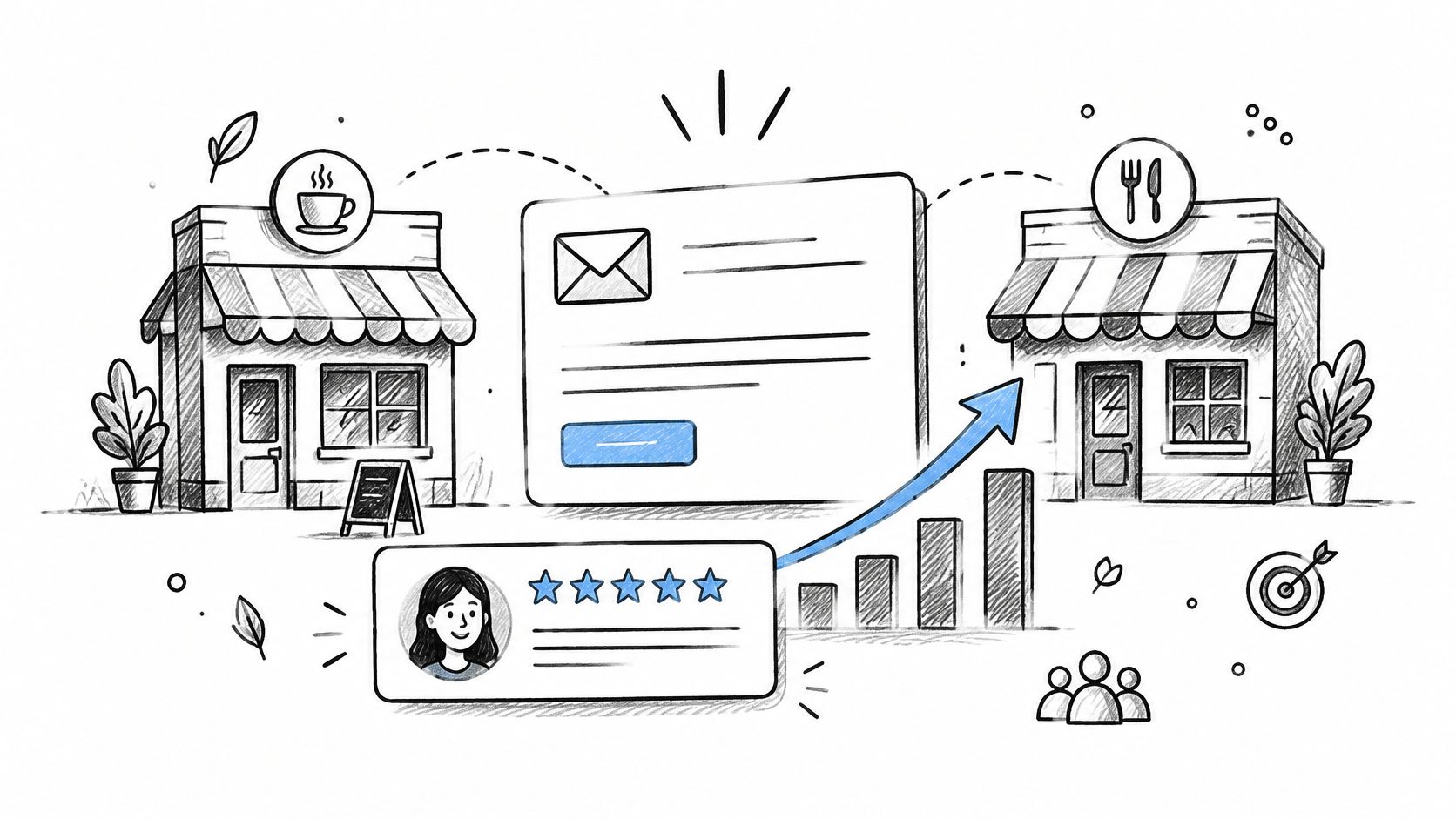
Lead with a result a lookalike would recognize, then offer the story, not an attachment.
Opening line: "We recently booked 12 qualified calls in three months for a cybersecurity consultancy with a similar buyer profile."
That sentence is sample copy. Only ship numbers you can verify and are allowed to name. Match industry and company size. "We help companies grow" is not proof. "Meetings booked" or "time to first call" is.
Follow-up that does not invent a second trophy
Touch two offers the write-up. Touch three asks whether that outcome is even on their board this quarter. Do not staple a new logo every email. One proof, one ask.
Ever Outbound, where we're pay-per-close, builds these proof-led campaigns and shares named case studies that match each client's vertical. You can scan the pattern on our results page and steal the structure, not someone else's metric.
Verdict: it works when the buyer can see themselves in the example. It fails when the case is a different industry, a different size, or a number you would not defend on a call.
One-line test: same offer, half the list gets a named peer result and half gets a generic "companies like yours."
6. Referral and Mutual-Connection Email
Opening line: "[Referrer] suggested I reach out. They mentioned your team is expanding into the mid-market segment."
Then one proof and one ask: you have helped two firms make that same move, and a short call next week is the only request. Ask the referrer before you print their name. A borrowed name without permission burns two relationships.
A warm name does not turn a commercial note into a private letter. The FTC's 2017 CAN-SPAM notice makes the split clear: U.S. law does not generally require prior opt-in, but truthful headers and subjects, a physical address, a working opt-out, and a stop within 10 business days after an unsubscribe still apply.
Track it or you will mythologize it
- Permission first: a verbal yes from the referrer, logged.
- One reason they fit: the mid-market push, not "you two would vibe."
- Separate the replies: referral-sourced positives versus cold, or you will overfund the wrong motion.
Follow-up one assumes they missed it and restates the referrer's point. Follow-up two offers to talk to the person who actually owns the segment. Then the breakup from earlier, not a fourth retelling of the introduction.
Verdict: it works in B2B because trust arrives before the pitch. It fails when the "mutual" is a conference you both attended and nobody remembers.
One-line test: this month, tag every reply that names the referrer and compare meeting rate with your cold segment.
7. Personalized Video Email
Save the camera for accounts where one meeting would matter. A 45-second walkthrough of their onboarding page, one friction point, and a 15-minute fix is plenty. Mention their name and that single observation in the first seconds.
Opening line, in the email body: "Recorded 45 seconds on your onboarding page. One friction point, then I'll get out of the way."
Put the same observation in text. If the thumbnail dies, the note still stands. I would not send video to a 2,000-person list. Filters and humans both punish novelty that is not relevant.
Bulk rules still apply when the creative gets fancy. This deliverability note points out that Google's requirements mainly target personal Gmail, while bulk senders at roughly 5,000 messages a day face extra DMARC, alignment, and one-click unsubscribe rules, with Microsoft junking non-compliant mail starting May 2025. A clever Loom does not repair a domain you overheated.
The follow-up is text only: "Did the clip land, or should I paste the one fix here?" If you need a face in the frame for other channels, talking product characters for social ads is a different job. Do not paste that aesthetic into a first touch.
Verdict: it works under 90 seconds on high-value accounts with a real observation. It fails as a scaled gimmick with a generic homepage scroll.
One-line test: 20 high-value accounts, video plus text versus text alone, and judge meetings, not clicks.
8. Value-First Resource Email
Give something they can use before you ask for time. A three-team benchmark, a one-page audit, a follow-up skeleton for their segment. If it only makes sense after a demo, it is a bribe, not a gift.
Opening line: "I put together a quick note on how three B2B SaaS teams in your segment are structuring their outbound follow-ups. Happy to send it over."
The follow-up delivers fast, then one next step: "If the note matches how you run pipeline, worth 15 minutes?" Do not attach the file to the first email. The reply is the handshake, and it tells you they wanted it.
Do not gift your way onto a blocklist
For senders at 5,000 or more messages a day to Gmail, Google's sender requirements (effective February 2024) call for authentication, easy unsubscribe, and a user-reported spam rate kept below 0.1%, while 0.3% or higher is the level to avoid. A helpful PDF still needs one-click unsubscribe on promotional mail. Reuse one lead magnet per segment so you are not hand-building a novel for every row.
Verdict: it works when the resource stands alone and maps to their motion. It fails when "value" is a 12-page pitch deck with the logo on every slide.
One-line test: offer the note with no call ask on touch one, and measure replies against your standard meeting ask.
How the eight cold outreach email approaches compare
| Item | Best For | Effort to Produce | Main Risk |
|---|---|---|---|
| Trigger-Based Personalized Opener | Timely, relevant outreach to researched prospects | High; requires prospect research | Stale or inaccurate triggers undermine credibility |
| Problem-Agitate-Solve (PAS) Email | Prospects with a clear, recurring business pain | Moderate; requires accurate pain-point insight | Agitation can feel manipulative |
| Breakup Email (Last-Touch Email) | Final follow-up after several unanswered touches | Low; short and easy to sequence | Can come across as a guilt trip |
| Quick-Question Email | Starting a low-pressure conversation with decision-makers | Low; requires a relevant, specific question | Vague questions may be ignored |
| Social Proof and Case-Study Email | Skeptical buyers and focused industry campaigns | Moderate; requires verified, relevant proof | Mismatched or unverified results hurt trust |
| Referral and Mutual-Connection Email | Relationship-driven markets and genuine warm introductions | Moderate; depends on a real connection and permission | A false or overstated connection damages credibility |
| Personalized Video Email | High-value accounts where tailored outreach is worthwhile | High; video takes time to create | Time-intensive and may feel invasive |
| Value-First Resource Email | Prospects who may respond to useful, relevant insight | Moderate to high; depends on resource quality and customization | Prospects may take the resource without responding |
Pick One Template, Test It, and Let the Replies Decide
Pick the pattern that matches the trigger you can verify. Hiring pages point to the opener in item one. A documented peer result points to the case-study note. A named introduction points to the referral. A fuzzy "we should personalize more" is not a segment.
Run it on a clean list for two weeks. Change one variable. Subject line, or problem sentence, or the ask. Not all three. Hold the audience and the sending window still, or you will learn nothing and blame the copy. Score delivered mail, total replies, positive replies, and meetings booked. Opens are a vanity lap.
Keep the legal floor in the same pass as the creative test. The FTC's CAN-SPAM compliance guide requires accurate From, To, Reply-To, and routing information, no deceptive subject lines, a valid physical postal address, and a clear opt-out that can process requests for at least 30 days after the send. Honor the unsubscribe within 10 business days. Each violating email can incur a civil penalty of up to $53,088. A witty breakup line does not waive that.
I would rather see 80 honest sends from a warmed domain than 800 clever ones from a domain you just bought. If complaint rate climbs, cut volume before you tweak adjectives. Delivery is not inbox placement, and inbox placement is not a qualified conversation.
If you would rather hand the testing and sequencing to a team, Ever Outbound runs these campaigns as a pay-per-close service, where we're only paid when you close. We verify decision makers, write short copy on warmed domains, and book interested prospects onto your calendar. You show up and close. Campaigns go live once you approve the copy.
Ever Outbound Inc. runs done-for-you cold outreach email for agencies, consultants, SaaS teams, and other B2B services, from the offer and the verified list through human-written sequences, warmed sending, and booked calls. You pay a 5% commission only when you close, and the first two closes are commission-free, with plans from $97 a month. See how the campaigns are built at Ever Outbound Inc..