November 26, 2026
Outbound Marketing Examples: 8 Tactics That Book Meetings
You sent 500 emails on Monday. It's Friday afternoon. Four opens, zero replies, one spam complaint, and a creeping suspicion that the channel is finished. So you blame the market, decide buyers don't read cold email anymore, and start drafting a post about how outbound is broken.
The market isn't the problem. The campaign was. Those 500 emails went to a list nobody qualified, carried a message that could have gone to any company in any industry, and had no follow-up behind it. That's not outbound, that's a lottery ticket with a subject line.
The campaigns that book meetings do three things the batch-and-blast crowd skips. They choose a channel that matches how their buyer pays attention. They attach the outreach to a trigger or a signal that makes the timing make sense. And they build a follow-up sequence long enough to survive being ignored four times. In 2025, 79.7% of sales professionals surveyed included email in their outreach strategy, according to Seamless.AI's 2025 sales channel report, which is exactly why the bar for standing out moved from volume to relevance.
Below are the outbound marketing examples worth copying. Each one is broken down the way an operator runs it: setup, execution sequence, the timing that matters, the trade-off nobody mentions, and a checklist you can run this week.
Table of Contents
- 1. Account-Based Direct Mail Campaigns
- 2. Personalized Video Prospecting
- 3. Multi-Step Cold Email Sequences
- 4. Trigger-Based Outreach
- 5. LinkedIn Plus Email Multi-Channel Cadence
- 6. Value-First Free Audit Offer
- 7. Breakup Email Re-Engagement
- 8. Event and Conference Targeted Outreach
- 9. Referral and Warm Introduction Outreach
- 10. Cold Calling With Pattern-Based Scripts
- How the eight outbound tactics compare on cadence, fit, and main risk
- Pick One Channel, Test It, Then Stack the Next
1. Account-Based Direct Mail Campaigns
Direct mail works because the channel is nearly empty. A box arrives at a VP's desk with a handwritten note, a copy of a book she mentioned on a podcast, and one line saying you'll call Thursday. That package can win more attention than an inbox with 60 unread emails because nothing else is competing for space on the desk.
PFL reports that 70% of its booked meetings were influenced by direct mail and that it saw a 10.5% conversion-to-meeting rate after direct-mail sends, according to its BDR playbook case study.
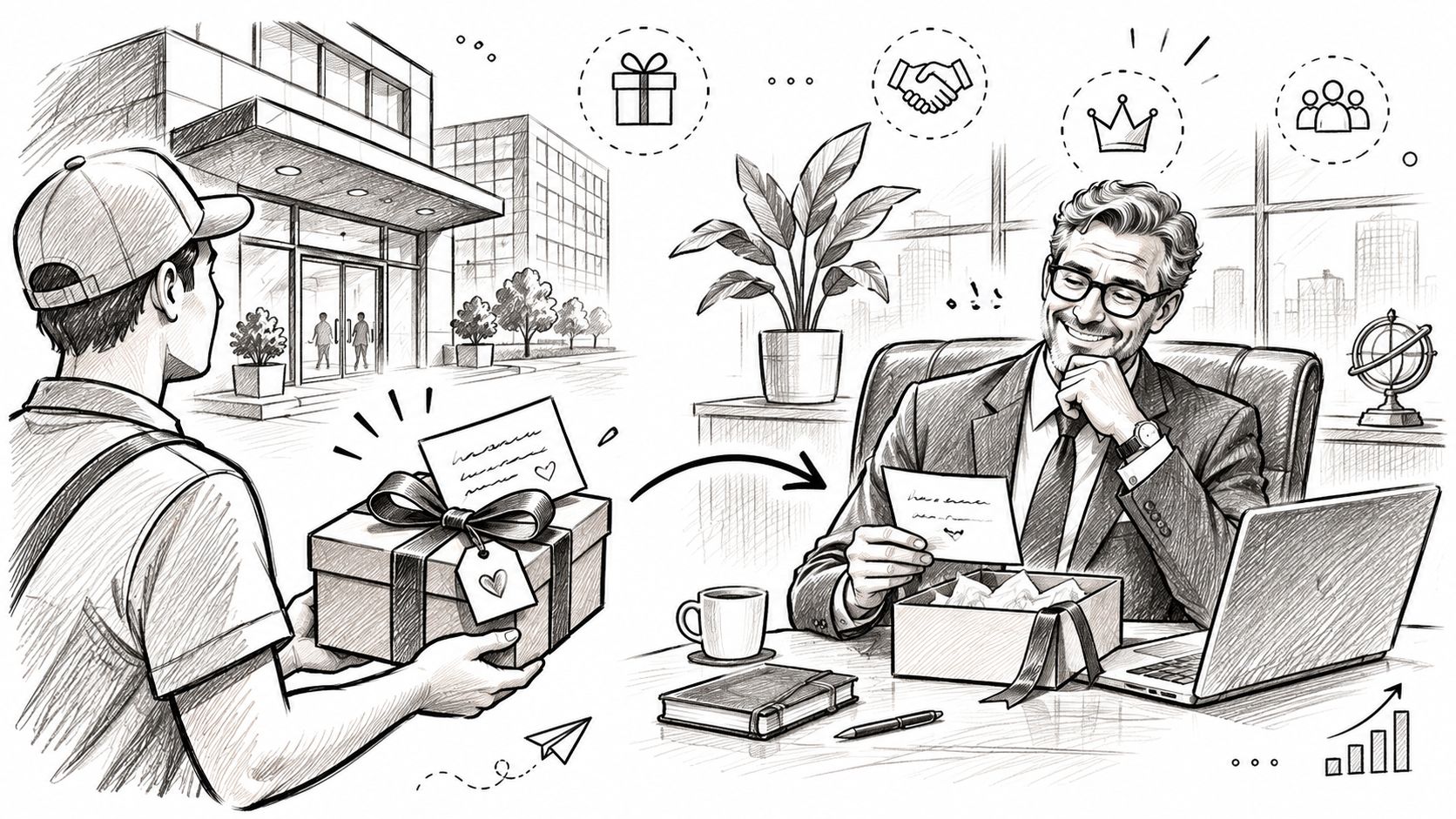
The sequence behind a package that earns a reply
Start with 25 to 50 accounts that already clear your fit bar: right headcount, right stack, someone with budget authority. Keep the first send small enough that you can inspect every response, because a weak list makes the economics look worse than they are.
Pick one trigger per account: a funding round, a new VP hire, a product launch. Write the note around that event. A generic gift box gets thrown out. A box that references a Series B and an open security-engineer role gives the recipient a reason to connect the gift to a business priority.
Then build the timing. Package lands Tuesday, email referencing the package hits Wednesday, the call goes Thursday or Friday. If you don't follow up within 2 to 3 business days, the box becomes a mystery object on someone's desk and the recognition advantage evaporates.
The email should mention the item plainly rather than tease it. The call can use the same trigger and ask whether the timing is relevant. Every touch needs to feel like the next step in one deliberate sequence.
- Flag the accounts you can't ship to before printing anything: customs restrictions, do-not-contact status, or anyone fresh off an unsubscribe.
- Price the fulfillment per account, not per package. Shipping, print, and address verification are the cost drivers, and they change how many accounts the test can support.
- Log every send in the CRM with a task attached, so the email and call happen on schedule instead of depending on someone's memory.
- Write the follow-up before the package ships, using the same trigger that shaped the note. That keeps the sequence consistent when several packages land at once.
Track which accounts book meetings rather than which packages arrive. If you want the email and LinkedIn follow-up handled as a managed service, Ever Outbound's fully managed outbound platform sources and vets leads, writes personalized outreach, warms sending infrastructure, and runs campaigns while booking interested prospects onto your calendar. The physical fulfillment remains a separate operation. For the print piece itself, custom greeting cards are a cheaper starting point than bespoke packaging for the first test.
The trade-off is honest arithmetic. At a $5,000 contract, direct mail rarely pays back. At a $50,000 contract, one extra meeting from 40 packages is a fine return.
Strong operators treat the package as the opening beat and sequence the digital touches while the box is still on the desk.
2. Personalized Video Prospecting
An agency founder opens a screen recorder, pulls up a prospect's homepage, and spends 45 seconds saying what she'd change about the hero section. She drops the link into a plain email with the subject line "the pricing page". Twenty minutes later, a reply arrives.
That's the whole tactic: a clip under a minute that names the recipient, references something real about their business, and asks for one specific next step. Tools like Vidyard, Loom, and Lemlist make recording and tracking about as hard as sending an email, which is why the channel filled up fast and why the average clip stopped converting.

Where video prospecting breaks
Skip the throat clearing. Open with the prospect's name and a specific observation inside the first five seconds. "Hi Dana, I looked at your checkout flow this morning" beats "hope you're having a good week". If the opening is a greeting, the viewer closes the tab.
End with one ask. Not a demo, a call, and a downloadable guide in the same minute.
Send a plain-text fallback to anyone whose gateway strips the thumbnail. Corporate mail filters break embeds more often than people expect, and a dead player reads as incompetence. Keep production value deliberately low. A recorded screen share in your actual voice outperforms a studio edit, because the channel sells the idea that a real person is on the other end. Cap the volume. Video costs a few minutes of real research per prospect, so it doesn't belong in a 500-a-day program.
Judge it on watch time and replies, not opens. A historical industry benchmark cited for 2020 reported an average marketing-email open rate of 18% and an average click-through rate of 2.6% across industries, according to Knak's history of email marketing, and those were directional before pixel blocking got aggressive. A campaign reporting on opens alone is measuring a shrinking slice of reality.
Ever Outbound runs personalized outreach as part of its campaigns, and we're pay-per-close, so our team earns only when a deal closes from that outreach.
The trade-off: video is great for enterprise and high-ACV deals where a human face earns trust, and a poor fit for wide lists where you can't do the research.
3. Multi-Step Cold Email Sequences
Cold email's first famous campaign is still the template. On May 3, 1978, Gary Thuerk of Digital Equipment Corporation sent what is widely regarded as the first mass-marketing email to roughly 400 users on ARPANET, and historical accounts commonly attribute about $13 million in sales to it, a figure Thuerk and DEC reported rather than any independently audited attribution system, per the EmailCalculator history of email marketing. One send, a defined audience, a number attached to revenue.
The structure that gets replies today is five to seven emails over three to four weeks, each adding something new. Then a short breakup message.
The arc that works
Email one: one sentence of context on why you're writing, one of proof, one ask. Email two: a case study with a number in it. Email three: an insight, no ask. Email four: a different, lower-commitment offer. Email five: a question like "is this even a priority this quarter?" Email six: the breakup.
The Predictable Revenue model Aaron Ross built at Salesforce made this repeatable, and the current version is the same shape with tighter copy and sharper segmentation. Say a cybersecurity firm sends to 400 CISOs: the first email earns two replies, the fourth earns eleven, and the team would have killed the sequence at day nine if they'd only looked at the opener.
Keep each email under 100 words and send from a warmed domain, never your primary one. Spread volume across several mailboxes and cap daily sends per inbox. Review reply text weekly and rewrite the weakest step first.
Volume caps aren't optional anymore. Since February 2024, senders reaching Gmail personal accounts must authenticate, and anyone sending more than 5,000 messages a day to Gmail accounts must offer an easy unsubscribe, with Google recommending a user-reported spam rate below 0.10% and out of the 0.30% range, per Google's sender guidelines. That threshold is the reason to cap sends per mailbox rather than maximize daily volume.
A sequence dies at step two, not step one. Look at reply text, not opens, to find out which email is the problem.
Plan the arc with Ever Outbound's email sequence generator before you touch the sending tool, and keep the whole thing under the length your buyer reads on a phone.
4. Trigger-Based Outreach
Timing beats list size. A managed IT provider emailing 60 companies that just posted a job ad for a security engineer will outbook a competitor emailing 6,000 random IT directors. The reason isn't copy, it's context: the prospect already has a problem with a deadline attached.
The signals worth watching: funding rounds, leadership hires, job postings for roles you serve, product launches, technology changes visible in a stack scan, acquisitions, regulatory deadlines.
The two-week window
Act within one to two weeks of the trigger. After a month, every vendor in your category has already called, and you're the fifth email referencing the same announcement.
Name the trigger in the first line and tie it to a problem rather than your service. "Saw you're hiring three SDRs, which usually means pipeline volume is the bottleneck before quota" earns a reply. "Congratulations on the funding" doesn't.
Stack signals where you can. A Series B plus a job posting for a VP of Engineering is far stronger than either alone, and it tells you which offer to lead with.

Document which triggers convert. Many teams find two or three signal types carry the whole program and the rest is noise, and they only learn that by tracking meeting rate per trigger.
Know the boundary before you build the list. Under the ICO's guidance on business-to-business marketing under UK PECR, you can generally email corporate subscribers such as limited companies, LLPs, and public bodies without prior consent, provided you don't disguise your identity and you give a valid opt-out, while sole traders and some partnerships are treated as individuals and need specific consent or a soft opt-in. A list scraped from job boards blurs that line, so qualify company type, not just the domain.
Score each signal for urgency before it enters the queue. Assign an owner within 24 hours of the trigger landing, or the window closes. Retire stale triggers after two weeks rather than recycling them as filler.
The trade-off: trigger-based lists are small and perishable. You can't buy your way into a bigger one, and pipeline depends on how many signals your market produces.
5. LinkedIn Plus Email Multi-Channel Cadence
A consultant spots a prospect's post on hiring in-house versus agency support. Monday, they leave a specific comment. Wednesday, an email opens with the same topic: "your post about hiring in-house vs agency matched something we saw last quarter". The connection request sits between them, short and pitch-free. By the email, the name is already familiar.
That cadence, comment, connection request, email, then a call, works because buyers rarely respond to a single channel. The repeated idea feels familiar rather than fresh, and each touch has a different job.
Stagger the channels
Never run two touches on the same day. The sequence should feel like a person who happens to be around, not a schedule. Engage with the prospect's content first, send the connection request second, and keep the LinkedIn message short, one observation and one question, with the email doing the heavier lifting.
Sales Navigator research before the email sequence is the standard version of this. The version that books better starts with the post. Find something they said, respond to it in public, then carry that context into a short email. If they expand into a new vertical or geography, build the prospecting and messaging from scratch around that move rather than reusing the old angle.
Limelight Software turned 48,000 leads into sales-qualified demos at almost 3% within days using automated prospect research and personalized outreach, per HubSpot's case study library. The transferable lesson isn't the rate, it's that the team optimized for a defined downstream event rather than raw contacts.
Comment before you connect. A profile that has already appeared in their notifications gets accepted more often.
Cap touches at two or three per week across all channels combined.
Avoid automation tools that breach LinkedIn's terms, because a restricted account burns the warm audience you just built.
Email inside this cadence carries legal obligations. Every marketing message needs a clear opt-out, the mechanism must stay live for 30 days after the send, and you have to honor the request within 10 business days, per the FTC's CAN-SPAM compliance guide. Build suppression into the cadence, not after it.
Ever Outbound's LinkedIn outreach system runs the network and email side by side for exactly this reason.
6. Value-First Free Audit Offer
A cybersecurity firm pulls a prospect's public attack surface data, writes three findings and one recommendation into a two-page PDF, and attaches it to the first email. No gate, no form, no call required to access it. That single decision does more for reply rates than any subject line test.
The same pattern works for marketing agencies (homepage speed, SEO gap), paid media teams (an ad account teardown), and consultants (a positioning critique). The audit is short, specific, and useful whether or not they buy.

Three findings, one recommendation
Cap it at three findings and one recommendation. A twelve page audit gets skimmed and archived; three findings get replied to.
Make the findings specific enough to prove you looked. "Your Core Web Vitals LCP is 4.2 seconds on mobile" beats "your site could be faster".
Put a single meeting link at the end. Two CTAs halve the response.
Automate the data collection, not the judgment. Free tools will happily dump 40 issues on you, and the value is in choosing the three that matter for their stage.
The industry is already automating this. A 2025 industry guide reported that roughly 35% of companies were already using AI in email workflows, per Demand Gen Report's interview with Validity's Guy Hanson, and the same environment demands stronger authentication, one-click unsubscribe, and complaint-rate control. Generic AI-generated personalization raises volume while lowering relevance and lifting complaints, so keep a human reviewing every audit before it ships.
What I'd hold the line on: if the audit could embarrass the prospect if forwarded to their boss, it's a pitch, not an audit.
Run yours through Ever Outbound's cold email grader before sending, and steal structure from the cleverest humorous B2B ad campaigns if your sector's messaging all sounds identical.
The trade-off: audits cost analyst time, so they suit offers above roughly $10,000 where one converted meeting covers a week of preparation. Below that, a checklist template beats a custom audit.
7. Breakup Email Re-Engagement
Four emails in, silence. Most reps either keep sending the same message or drop the thread. The breakup email is the third option: a short note saying you'll close the loop unless they reply.
It works because it removes the pressure of a pending decision. A busy prospect who was mildly interested can resolve the thread with one word, and a meaningful share of them resolve it by asking for time on the calendar instead.
Four lines, no guilt
Open with the assumption. "You haven't heard from me in a couple of weeks, so I'll assume the timing isn't right and stop reaching out." Then one line of value, one referral question, and your name.
Under 50 words total. Anything longer reads as a pitch wearing a breakup costume.
Keep the tone neutral. Guilt trips, "I guess you're not interested", and fake finality all convert worse than a plain statement of fact, and they cost you the referral.
Recruiting firms get a second use out of it. The email to a hiring manager asking to be pointed at whoever owns the role often comes back with a name, which is worth as much as a meeting.
Ask for the right contact, not a favour. "Is there someone else I should contact?" is easy to answer. Offer the referral exit and make it easy to say no without deleting your address. Track replies per 100 sends against earlier steps. If the breakup outperforms step two, your middle emails are the problem.
Reuse the winning phrasing. The breakup that gets replies in one segment usually works in the adjacent one, with the trigger swapped.
The trade-off: it only works once per sequence. Send it, honor the promise, and if they reply six months later, that's a fresh campaign, not a resurrection.
8. Event and Conference Targeted Outreach
Events are the one time of year your entire addressable market stands in a room with badges on. The mistake is waiting until you're there. Work starts three weeks out.
Confirm the date and whether the attendee list is published or gated before building anything. Exhibitor, speaker, and sponsor lists go public far earlier than attendee lists, so start there, then use the event hashtag to find people who've announced they're going.
Book before the badge scan
Offer two or three specific slots rather than an open invitation. "Tuesday at 2, or Wednesday at 10, booth 214 or the coffee stand" converts. "Let me know when you're free" doesn't.
Use the event as the reason in every touchpoint, including the subject line. A pre-event email that says "see you at Black Hat" reads differently from a generic intro.
Send the first follow-up within 48 hours after the event, and reference a session or a conversation rather than the fact that you met. By day five, the prospect has forgotten which vendors they spoke to.
Check speaker and exhibitor pages first, since those names are public and the context writes itself. Offer booth-side or coffee-stand meetings, which cost the prospect nothing and take ten minutes. Log the conversation in the CRM the same day, while the detail is still accurate.
Proving ROI on event marketing is harder than any other channel because cost concentrates in travel and sponsorship while attribution scatters across badges, booth scans, and hallway conversations. Pick one metric before you go.
The trade-off: event outreach is deadline-driven and lumpy. It produces a spike of meetings around a date and nothing the following month, which makes it a weak primary channel and a strong accelerator for one already running.
9. Referral and Warm Introduction Outreach
Cold outreach asks a stranger to trust you. Warm outreach asks a mutual contact to lend you theirs. Same message, completely different reply rate, and both belong in the same CRM.
Ask for the introduction with the email already drafted. A connector who has to write something from scratch will do it next week, which means never. Give them three lines they can forward unchanged, addressed to the prospect, with your name in the signature.
Coaching businesses run this constantly: three past clients, three drafted intros, three conversations with peers in the same industry. Consultants do it through alumni and partner networks, where the shared context is already established.
The connector script
Line one: who you are and how you know the connector. Line two: the specific problem you solve for companies like theirs. Line three: one ask, one time slot, and permission to say no.
Then reference the introduction in your first line to the prospect. "Priya suggested I reach out after your conversation about the warehouse rollout" does more work than any subject line.
Warm intros also route around a problem cold email can't fix. A 2025 benchmark reported an average global inbox-placement rate of 87.2% and noted that B2B placement at hosting platforms declined by 1.3%, per Validity's 2025 benchmark report. Roughly speaking, a chunk of what you send is delivered but never seen, and an introduction doesn't depend on placement at all.
Which is the broader point: a campaign with a lower reply rate can beat a high-engagement one when it reaches better-fit accounts and produces more revenue per meeting.
Give the connector a reason to help, such as a shared client success or a favour you've already done. Draft everything for them, down to the subject line. Close the loop afterwards with what happened, because connectors who hear the outcome make the second introduction.
The trade-off: warm intros don't scale with budget. They scale with delivered work and how many relationships you maintain.
10. Cold Calling With Pattern-Based Scripts
The phone still works, mostly because everyone else stopped using it. A rep who calls 30 qualified leaders in a morning gets more real-time qualification than a week of email, and a conversation settles in 90 seconds what email negotiates over six touches.
The pattern interrupt is the mechanic. Most prospects answer expecting a pitch and get a shortcut to the point instead.
The 15-second opener
State who you are, why you're calling, and one specific reason, then hand them a question. "I'm calling because I saw you're moving to a new billing system, and reconciliation problems are common in the first quarter. Do you own that, or should I be talking to someone else?"
Keep the opener under 15 seconds. If they say no, ask for the right name, which turns a rejection into a referral.
Leave a short voicemail and send a follow-up email the same day, so your name looks familiar when the email lands. Call early morning or late afternoon, when calendars thin out and gatekeepers are less likely to be on the line. Review recordings weekly. Most scripts fail on the second sentence, where the rep pivots from the reason to the offer too early.
Consultancies get an easy version of this: call leaders the day after a public announcement, reference it, and ask one qualifying question. Sales development teams do the same with a voicemail plus an email to IT decision-makers, because the two touches together beat either alone.
Ever Outbound's cold qualification process keeps the qualification on the call, so the meeting you book is a real meeting rather than a calendar slot that no-shows.
The trade-off: calls are expensive per touch and don't scale without reps. Keep them for accounts where a single deal justifies 20 minutes of one-to-one attention.
How the eight outbound tactics compare on cadence, fit, and main risk
| Item | Typical Cadence | Best For | Main Risk |
|---|---|---|---|
| Account-Based Direct Mail Campaigns | Coordinate with email and phone; follow up within 2–3 business days | High-value B2B accounts and long sales cycles | High cost per account; gift policies may block delivery |
| Personalized Video Prospecting | Per prospect; send through email or LinkedIn | Building rapport with agency or consultancy prospects | Shallow personalization can feel invasive |
| Multi-Step Cold Email Sequences | 5–7 emails over 14–30 days | Repeatable, measurable prospecting | Poor execution can harm sender reputation |
| Trigger-Based Outreach | Contact within 1–2 weeks of a buying signal | Prospects showing timely buying signals | Signals may be inaccurate or go stale |
| LinkedIn Plus Email Multi-Channel Cadence | 2–4 weeks, across several channels | Senior buyers and prospects who ignore single-channel outreach | Poor coordination can feel like spam |
| Value-First Free Audit Offer | As needed for targeted prospects | Marketing agencies and cybersecurity providers | Audits take time and may not lead to meetings |
| Breakup Email Re-Engagement | Final step after several unanswered follow-ups | Re-engaging warm but inactive prospects | Can feel abrupt if poorly phrased |
| Event and Conference Targeted Outreach | Start 2–4 weeks before the event; follow up within 48 hours after | Booking meetings around industry events | Missed timing can make the campaign ineffective |
| Referral and Warm Introduction Outreach | As introductions become available | Reaching prospects through trusted connections | Difficult to scale; relies on existing relationships |
| Cold Calling With Pattern-Based Scripts | Call during prospect working hours; follow up by email the same day | High-value targets needing quick qualification | Low connect rates; poorly timed calls can feel intrusive |
Pick One Channel, Test It, Then Stack the Next
The failure mode isn't picking the wrong tactic. It's launching five at once on a list nobody vetted, then concluding outbound doesn't work.
Run one tactic with a tight list and one clear metric for two weeks. Pick the channel that matches your buyer's attention, a 25 to 50 account direct mail test, 50 personalized videos, or a 100-account cold email sequence, and measure the downstream event rather than activity. The metric that matters at the end of two weeks is booked meetings, not sends.
If nothing books, change the list before you change the copy. Targeting failures look identical to messaging failures in a report, and a list of companies that never had the problem is the most common reason a well-written sequence flops.
Once one channel books meetings reliably, layer the second. The second channel's job is to make the first one feel familiar, which is why LinkedIn plus email outperforms either alone and why a package plus a call beats a package sitting on a desk. Add a channel only when the existing one has a baseline you can compare against.
The most useful habit is measuring by segment rather than by campaign. Group replies and meetings by industry, company size, and trigger type, and the pattern appears within three weeks. Usually two segments produce most of the meetings and the rest of the list is decoration.
At Ever Outbound we're pay-per-close, so the same math applies to our done-for-you service. We build verified lists, write personalized copy on warmed domains, and book qualified calls straight onto your calendar, and you pay a commission only when a deal closes. That structure makes the target-account coverage and qualified-meeting numbers above our problem as much as yours, which is a decent incentive to get the list right.
Pick the tactic that fits your market and map its first three touches this week. Three touches, one list, one metric. That's enough to learn whether the channel deserves a second week, and it's more outbound than many teams run in a quarter.
Most agencies and consultants don't need another tactic, they need someone to run the list, the copy, and the follow-up without hiring a BDR. Ever Outbound Inc. builds verified decision-maker lists, writes personalized sequences on warmed sending infrastructure, and books interested prospects straight onto your calendar, with a first 2 closes commission-free on our pay-per-close model. If your pipeline depends on outbound this quarter, visit Ever Outbound Inc. and see how a managed campaign gets built before you commit to anything.