November 27, 2026
Prospect Research Tools: 10 Picks by Use Case for 2026
Monday, 8:40 a.m. A rep pings you for sixty names by lunch. You have a blank spreadsheet, three pricing pages open in tabs, and not one of them will show you a number without a demo request. The trial you started last month burned 400 credits on contacts that bounced, and the "verified" badge on half of them turned out to mean "we checked it once, sometime before now."
The category behind those tabs is real money. The global sales-intelligence market grew from USD 2.78 billion in 2020 to an estimated USD 4.725 billion in 2025, with about 3.0 million paid seats, according to Ken Research's sales-intelligence market estimate. That's a lot of people paying for lists.
So this guide sorts ten options by the job you need done: finding contacts, verifying emails, researching accounts, or building custom workflows. Each entry covers what the tool does well, what it costs in credits, seats, or setup time, and where the data gets thin.
One disclosure up front. Ever Outbound is our own entry on this list, and we're pay-per-close, so we only earn when clients close deals.
If you want the wider field of AI research tools beyond sales prospecting, best AI tools for research covers the adjacent categories.
Table of Contents
- 1. Ever Outbound Inc.
- 2. Apollo.io
- 3. ZoomInfo Sales
- 4. Cognism
- 5. Lusha
- 6. LinkedIn Sales Navigator
- 7. Clay
- 8. Hunter
- 9. UpLead
- 10. Crunchbase
- How the prospect research tools compare on pricing model, free access, and best fit
- Pick Your Tool by the Job, Then Test It on a Small List
1. Ever Outbound Inc.
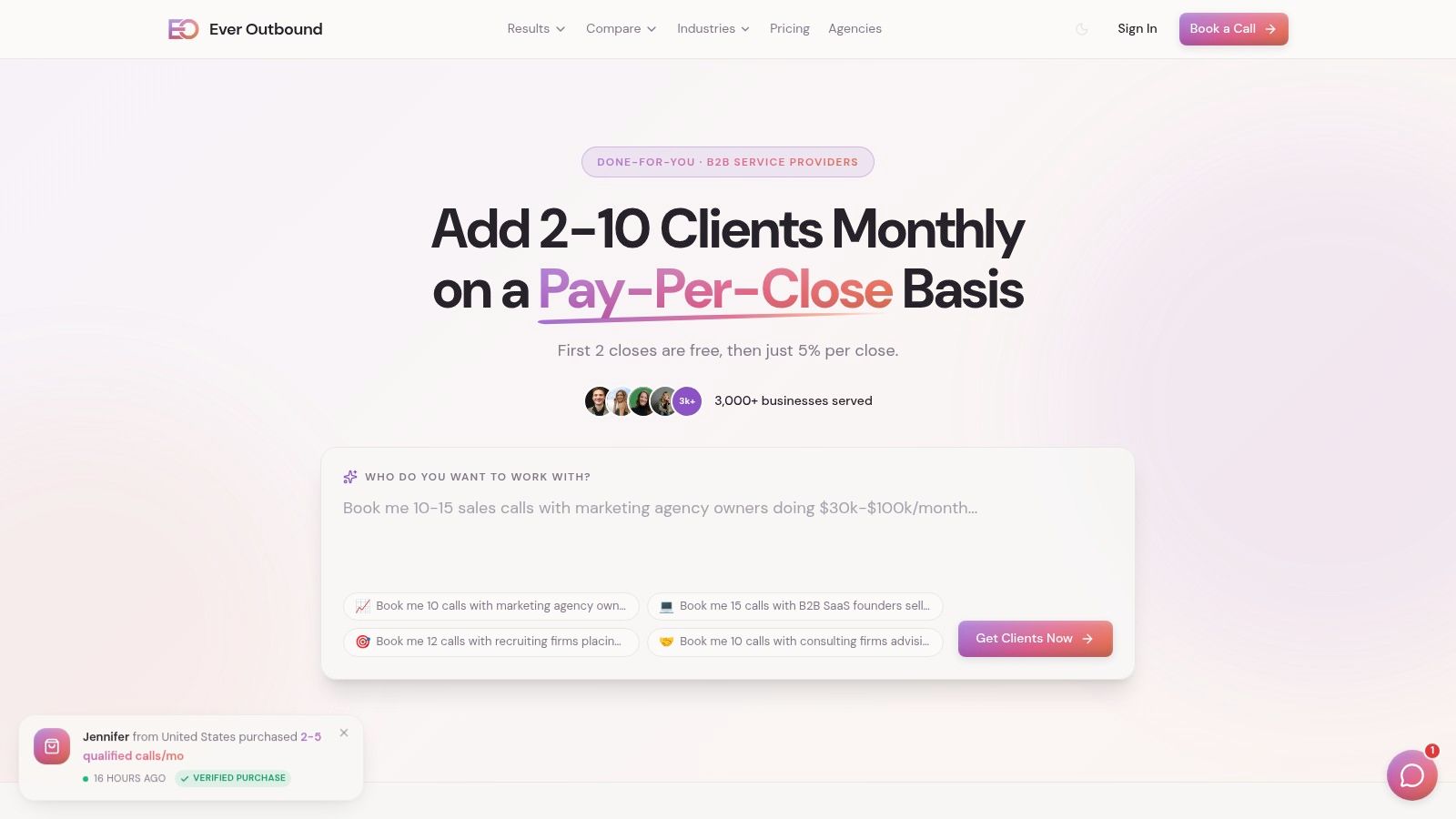
The job here is the whole job, not a contact database you filter yourself. Ever Outbound Inc. is a done-for-you B2B client-acquisition service for agencies, consultants, SaaS companies, and B2B service businesses. A human team builds the cold-traffic offer, researches and verifies decision-makers, writes the sequences, sets up and monitors sending infrastructure, handles follow-up, and books qualified calls straight onto your calendar.
What the research layer actually looks like
Surgical Prospecting is the list-building piece. Researchers hand-pick prospects against revenue, industry, and role, then verify each record before anything sends. Copy is written per prospect with real context rather than merged fields. Conversations stay human-led. AI speeds up research instead of inventing contacts.
You are not burning credits on a pull, then burning another batch when titles change. You pay for setup time and a managed service: the team builds the list, the offer, and the send. The shortfall is ownership. You cannot retune filters at 11 p.m., and a weak offer still kills reply rate no matter how clean the names are.
A client dashboard shows campaigns, replies, interested prospects, and booked calls as they happen. Agencies can resell the work white-label under their own brand and keep the margin.
What it costs, and what you give up
Pricing is a 5% commission on deals attributed to the work, and the first two closes are commission-free. Plans start at $97 per month. That monthly fee covers infrastructure, not a credit meter you can game by waiting for a "fair use" footnote. I would still ask, before signing, what counts as an attributed deal and how attribution is tracked when a prospect replies three weeks after the last touch.
Why hand verification still matters
Nearly 75% of more than 200 senior marketing-operations and demand-generation professionals estimated that at least 10% of their lead data was inaccurate, outdated, or non-compliant, and only 31% were completely confident in their privacy compliance, according to Integrate and Demand Metric's lead-data survey. More contacts from a bigger database does not fix that. A check-before-send process does.
Bounce rate decides whether the sending domain survives the quarter. Hand verification is the control you buy when you stop pulling your own lists.
2. Apollo.io
Apollo is the first tab opened each morning, and the free plan is why. It bundles a B2B contact and company database with list building, enrichment, a browser extension, and email sequences, so a small team can research and send from one login without a procurement call.
The strength is experimentation speed. Build three segments with different titles and industries, push them into sequences, and find out which one replies. The weakness is that the database is the product and the sequencing is the bonus. Treat contact data as a starting point, not a verdict.
- Good fit: agencies and SaaS teams running their own outbound who want discovery and sending in one place.
- Watch the credits: plan limits decide how much data you can pull, and the meter doesn't care that half your list needed re-pulling after a round of job-title changes.
- Verify before sending: sample the records against your actual target market, then run them through a verifier.
Integration decides whether it's worth paying for
A database that stays a database is a cost center. Aberdeen's sales-intelligence benchmark found that 43% of best-in-class companies integrated sales intelligence directly into the CRM, with another 27% planning to, and the resulting 70% eventual integration rate beat 61% among average performers. If the records don't land in your CRM with source attribution and a disposition field, you're paying for a second place to look.
Weighing self-serve against managed research? The Apollo.io comparison covers where the DIY model runs out of road.
3. ZoomInfo Sales
ZoomInfo is the enterprise option, and the pricing page announces that by refusing to announce anything. ZoomInfo Sales is a sales-intelligence platform for finding business contacts and researching accounts, built for teams with ongoing, coordinated prospecting across multiple users and defined territories.
The market it sits in is large and still growing. Grand View Research's sales-intelligence market analysis puts global sales intelligence at roughly USD 4.0 billion in 2025, projected to reach USD 8.7 billion by 2033 at a 10.1% compound annual growth rate from 2026 through 2033, with lead management the largest application segment at more than 35% of 2025 revenue.
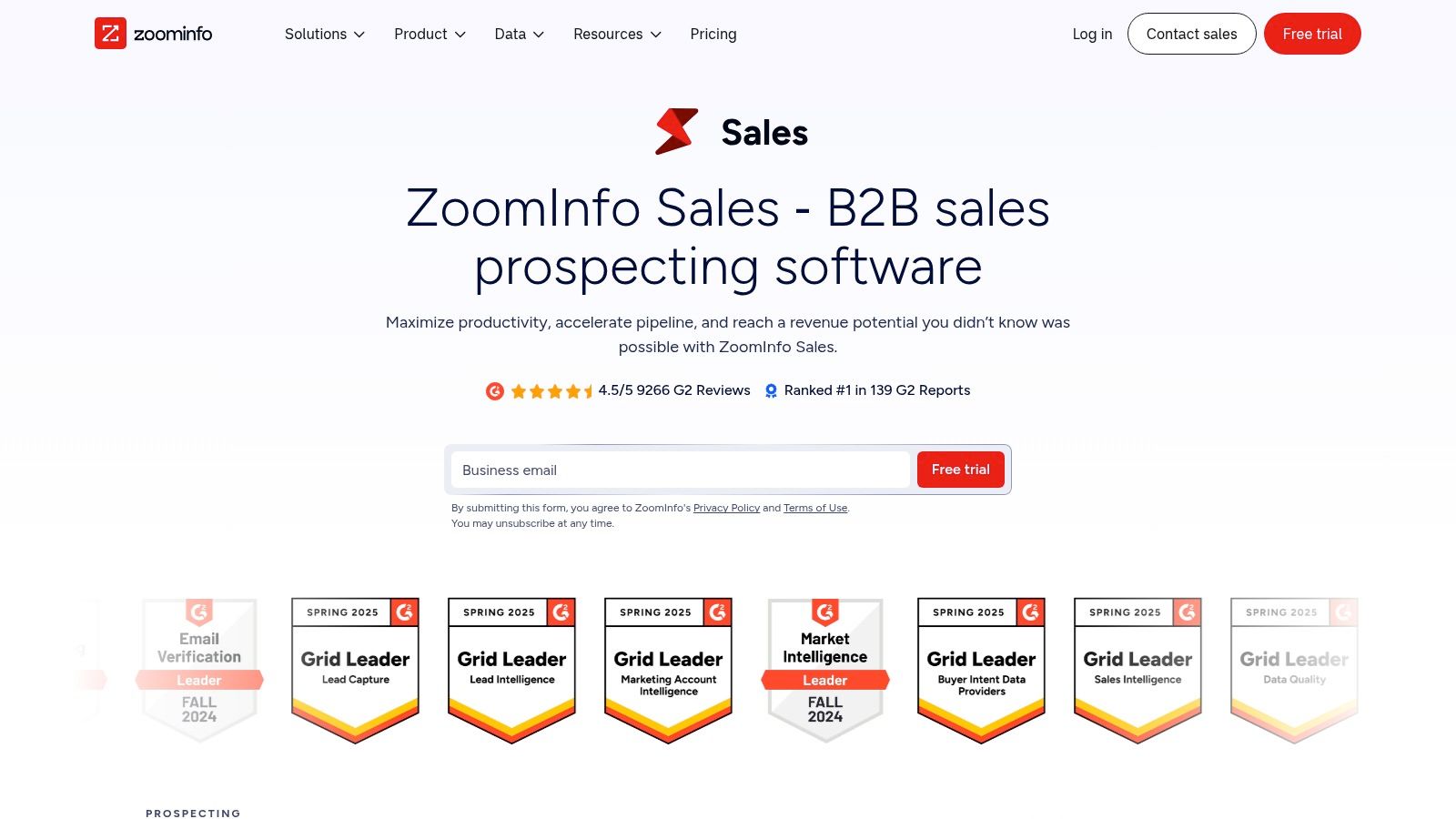
- Strengths: deep account and contact research, add-on products, and workflows that assume a real sales organization with territories and handoffs.
- Costs: quote-based pricing tied to functionality, users, and record volume. Budget conversations happen with a rep, never at a checkout page.
- Risk: coverage and freshness need testing against your named target accounts before you sign an annual term, because a renewal is a bad place to discover a gap.
Small teams with modest prospecting volume usually overpay here. If you can't name the three job titles you'll pull this week, you're not ready for a platform priced by seat and record volume.
4. Cognism
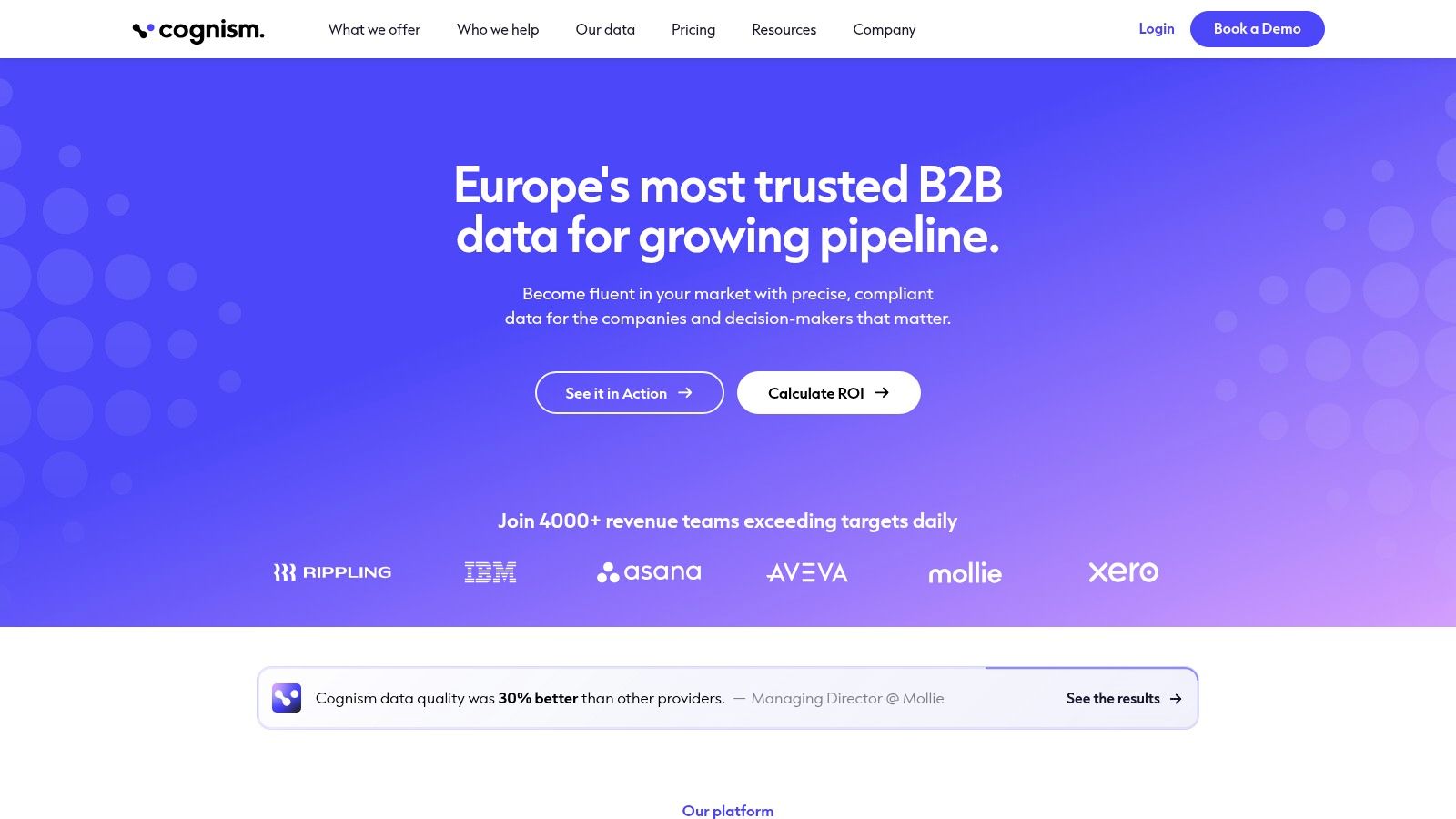
Cognism sells contact and company data plus CRM enrichment, and its filters go past title and industry into technographic and signal-based criteria. It also runs AI-assisted account research to help refine searches, which is useful when your ideal customer profile is easier to describe than to translate into filter logic.
Signals only help if they predict something. A 2025 Anteriad survey found 39% of marketing decision-makers used intent data for targeting, while Gartner's 2023 technology-marketing benchmark found adoption at companies with more than $100 million in revenue reached 93% for at least one use case, according to Zen Digital's intent-data vendor disclosure matrix.
Score the signal, not the sales deck
Skip "intent accuracy" as a concept and measure two things on closed-loop outcomes. Precision is the share of flagged accounts that became qualified opportunities. Recall is the share of opportunities you created that had been flagged beforehand. A trigger that fails precision just inflates outreach volume and annoys people.
- Good fit: teams that want filtering depth plus optional enrichment or data-as-a-service.
- Pricing: quote-based rather than published, with some capabilities tied to specific packages or add-ons.
- Test first: coverage in your industries and geographies, checked against records you already know are real.
5. Lusha
Lusha is the tool you open when you have a name and need a number, and the credit math is refreshingly specific. One credit for a verified email. Five for a phone number. A permanent free plan lets you test the workflow before anyone asks for a card.
Paid tiers add bulk enrichment, CRM integrations, API access, and signal features. The browser extension is the part users live in, pulling contact details while you're already reading a profile.
Do the credit math before you promise a list: if a phone reveal costs five credits and an email reveal costs one, a phone-heavy list drains your balance several times faster than an email list of the same size. Price that before a rep plans a call block around it.
Where it stops being enough
Phone lookups draining five times the credits of an email reveal changes how you build lists. Many teams end up email-first and phone-only for the accounts that warrant it. Rollover rules also vary by plan and billing period, so check what happens to unused credits at renewal rather than assuming they carry.
Coverage should be tested on a representative sample, not the one account you already know well. Pull twenty records from your target segment, verify them independently, and count how many survive.
6. LinkedIn Sales Navigator
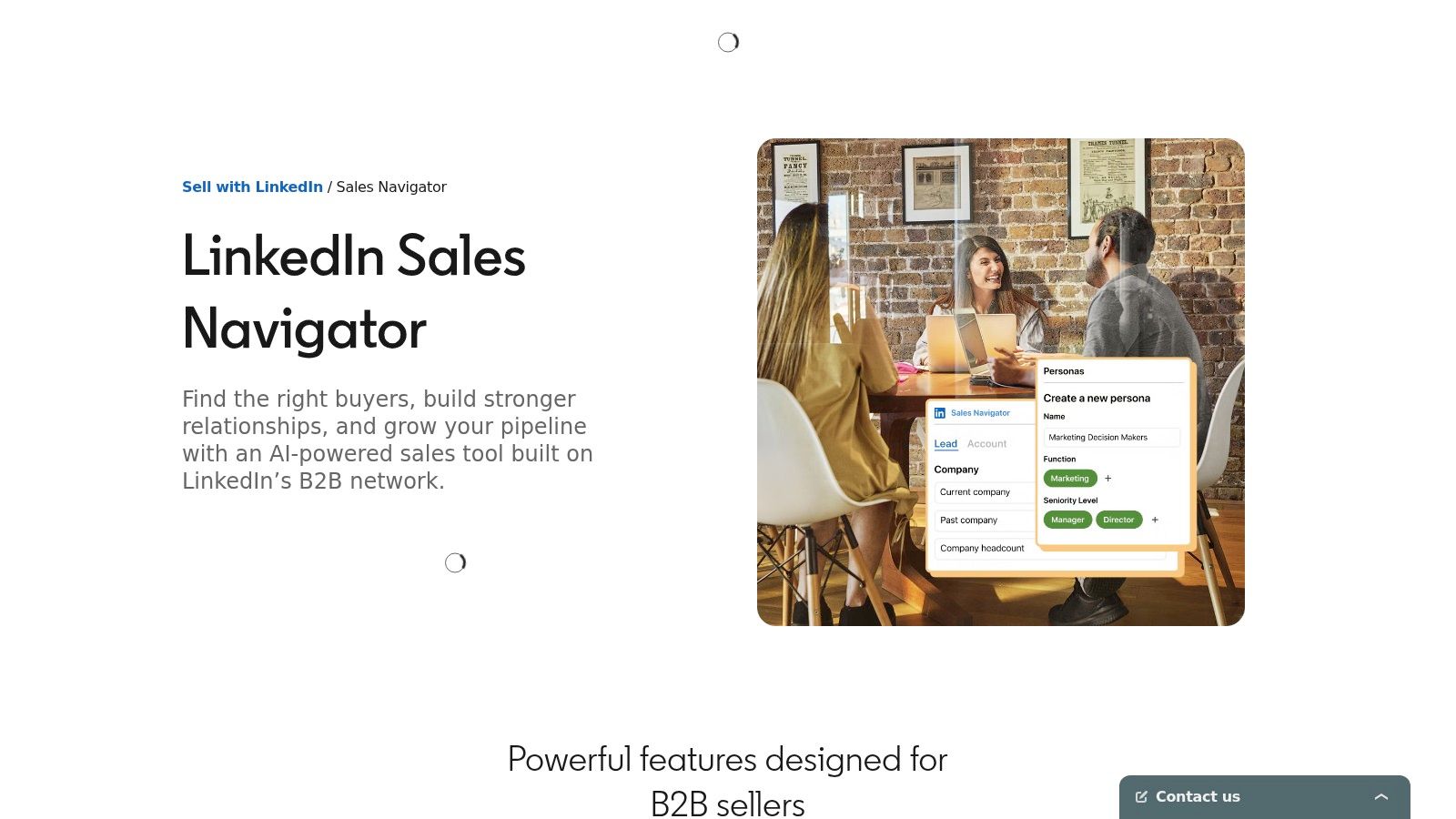
Sales Navigator doesn't sell contact data. It sells a place to watch people. Advanced lead and account search, saved searches, alerts when someone changes role, team collaboration on eligible plans, and CRM sync on Advanced Plus.
The reason it belongs in a prospect research stack is that buyers get there first. A 2026 compilation of B2B social-selling research reports that 75% of B2B buyers use social media to research vendors before engaging with sales teams, with LinkedIn named as the primary research platform, per Grow with Ghost's B2B social-selling statistics. If they're reading your profile before they answer your email, your profile is part of the campaign.
- Strengths: role-based research, change tracking, and a profile and company page you can tailor.
- Gaps: verified email addresses usually require another tool and a verification step, so budget for both.
- Costs: per-user subscriptions stack up, and CRM sync depends on your plan tier.
For pushing those profiles into sequences, the Sales Navigator outreach comparison covers how the handoff works.
7. Clay
Clay is a workspace, not a database, and that distinction decides whether you love it or abandon it in week two. You combine data sources, enrich records in a waterfall, research accounts with AI, and build the qualification logic yourself.
The pull toward workflow tools is measurable. In 2024, 54% of marketing-services firms used AI for new-business development, including 16% that used it to construct prospecting lists, according to Axiobench's B2B sales prospecting statistics.
Flexible, and priced like it
Waterfall enrichment is the key feature. One provider misses a field, the next one fills it, and you stop paying for the gaps. Custom qualification rules let you filter on things a title-and-industry search can't express.
- Strengths: multi-source enrichment, AI-assisted web research, and workflows you can't build inside a conventional database.
- Costs: setup time is real. Someone has to design and maintain the tables, and credit plus action limits make complex workflows harder to forecast than a flat seat price.
- Fit: teams with an ops person who enjoys this work, not teams hoping to skip it.
The Clay workflow comparison covers what changes when the build and maintenance move to someone else.
8. Hunter
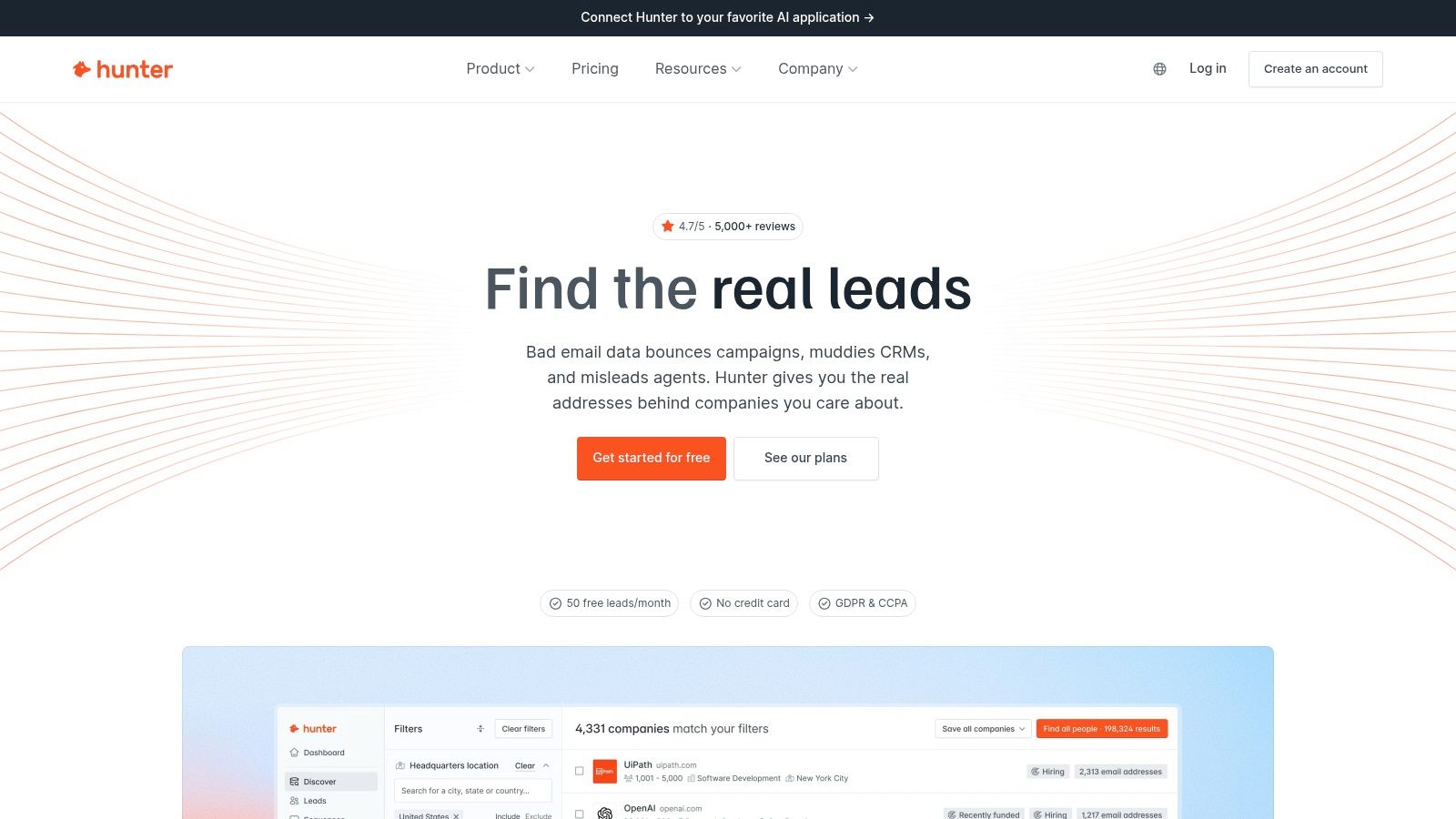
Hunter answers one question well. What's this person's email address, and does it still work? Domain Search, Email Finder, and verification sit at the center of the product, with Discover filters, sequences, and API access around them. The free plan includes 50 credits per month, which is enough to learn the interface.
Deliverability sets the ceiling on all of it. Since February 2024, senders emailing personal Gmail accounts must authenticate with at least SPF or DKIM, and bulk senders sending 5,000 or more messages per day to Gmail accounts must use SPF, DKIM, and DMARC, with Google recommending a spam rate below 0.10%, according to Google's sender guidelines. A verified address is worthless if your domain fails authentication.
Practical rule: verify before you send, not after the bounce report. A verified address costs a credit. A burned domain costs a quarter of pipeline.
Where it runs out
Hunter is thin on account intelligence and phone-based prospecting, and credits are metered, so repeated lookups on the same list add up. Before any campaign, run your sending domain through an email deliverability checker so you're testing lists on infrastructure that can reach an inbox.
9. UpLead
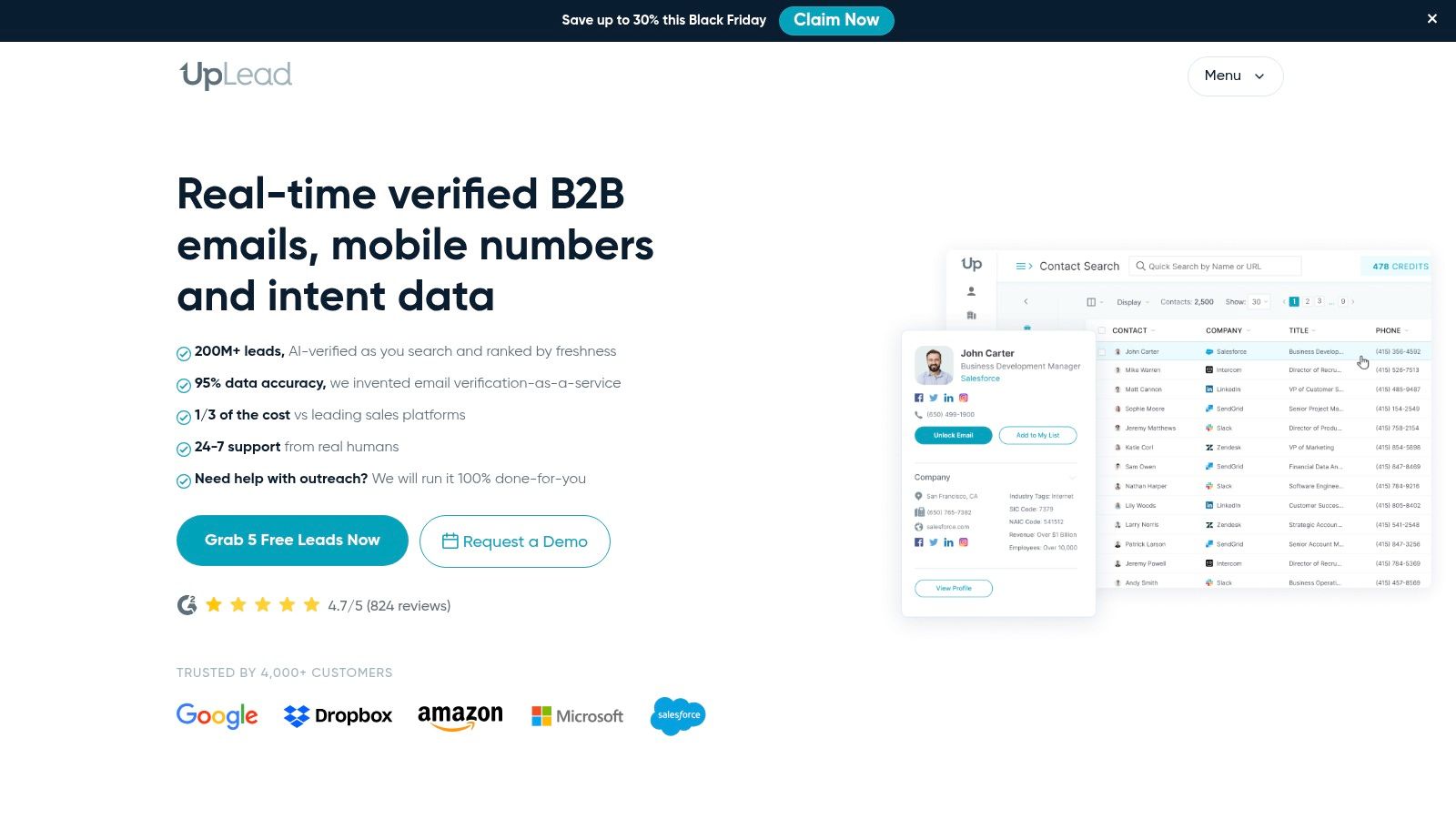
UpLead's pitch fits on a napkin. One credit provides one contact for download or CRM export, with email and mobile direct dial where available. A seven-day free trial includes five credits, enough to sample records before you commit to a tier.
The Chrome extension works while you browse or use LinkedIn, which makes ad hoc research less painful than exporting spreadsheets between tools.
Buying records moves the legal work onto you
Under the U.S. CAN-SPAM Act, senders must use accurate From, To, Reply-To, and routing information, identify advertising where required, include a valid physical postal address, and honor opt-out requests within 10 business days. Each violating email can carry a civil penalty of up to $53,088, per the FTC's CAN-SPAM compliance guide. The provider supplies the record. You own the compliance.
- Strengths: predictable one-credit-per-contact pricing and mobile numbers on many records.
- Watch-outs: monthly credit caps limit list size, and costs climb when you research several segments at once.
- Check fit: geography, industry, and job-role coverage for your specific market, on a sample rather than a hunch.
Clean the list before you load it. A lead list cleaner catches duplicates, malformed addresses, and role-based inboxes that should never enter a sequence.
10. Crunchbase
Crunchbase starts with the company, not the person, and that order matters more than most tool comparisons admit. Company search, funding and financial data, people records, and market information give you a way to build and rank an account list before anyone looks for an email address. A free account handles basic research, and Crunchbase Pro adds richer data plus a seven-day trial.
Buyers run this research themselves. In 2025, 96% of prospects researched companies or products before engaging with a sales representative, according to HubSpot's sales statistics. Your account research is competing with their own.
- Strengths: prioritizing companies by funding, size, and market position, then planning outreach around what you find.
- Limits: it's a research tool, not a contact verification service, so emails and direct dials need checking elsewhere.
- Tiers: some data and capabilities depend on your subscription level.
How the prospect research tools compare on pricing model, free access, and best fit
| Item | Pricing Model | Free Option | Best For |
|---|---|---|---|
| Ever Outbound Inc. | 5% commission on attributed deals, plus monthly infrastructure fee; listed fee differs ($97–$397/month) | No free plan stated; first two closes are commission-free | Done-for-you B2B outreach and appointment booking |
| Apollo.io | Free and paid plans; limits vary by plan | Free plan available | Finding prospects and running outreach in one platform |
| ZoomInfo Sales | Quote-based pricing | No free option stated | Established teams with ongoing prospecting needs |
| Cognism | Quote-based pricing | No free option stated | Teams needing prospect data, filters, and enrichment |
| Lusha | Credit-based paid tiers | Permanent free plan available | Individual prospecting and team data workflows |
| LinkedIn Sales Navigator | Core and Advanced plans; Advanced Plus pricing through LinkedIn | No free option stated | Discovering and tracking prospects on LinkedIn |
| Clay | Free and paid plans | Free plan available | Custom prospect research and enrichment workflows |
| Hunter | Credit-based paid plans | Free plan with 50 monthly credits | Finding and verifying professional email addresses |
| UpLead | Credit-based paid tiers | Seven-day trial with five credits | Accessing B2B contacts with email and mobile details |
| Crunchbase | Free account; paid Pro plan | Free account and seven-day Pro trial | Company discovery and market research |
Pick Your Tool by the Job, Then Test It on a Small List
Start with the job, not the logo. Need direct reach? A contact database. Need email hygiene? A verifier. Need custom qualification logic? A workspace like Clay. Need to decide which companies deserve outreach at all? Crunchbase. Buying a database to solve a research problem is how teams end up with a full export and no campaign.
Then test before you commit. Pull 100 records from your actual target segment, verify them independently, send to a small batch, and count what happens. Bounces, invalid addresses, wrong titles, and role changes all show up inside a hundred records if you're looking.
Total the monthly cost, not the headline. Credits get consumed by re-pulls and verification, seats multiply by team size, and enrichment add-ons sit outside the base plan. A cheaper tool you outgrow in six weeks is the expensive option.
Check the plumbing too. Google requires the organizational domain in your visible From header to align with either your SPF or DKIM organizational domain, and it flags missing authentication, invalid DNS, absent TLS, and malformed message structure as reasons for temporary or permanent failures, per Google's email sender requirements. No list survives bad infrastructure.
If you'd rather hand off the research and outreach entirely, our free discovery call is a low-commitment way to compare approaches. We're pay-per-close, so our fee only applies once deals you close come from our efforts.
Ever Outbound Inc. builds and runs the whole outbound engine for agencies, consultants, SaaS companies, and B2B service providers: offer creation, hand-verified prospect lists, personalized copy, managed sending infrastructure, follow-up, and calls booked onto your calendar. Everything above about data quality, credit burn, and deliverability is our daily work, which is why we price it as 5% commission on closed deals with your first two closes commission-free. Book a free discovery call at Ever Outbound Inc. and bring your target account list.