November 19, 2026
10 Salesloft Alternatives for 2026
Teams considering Salesloft alternatives may not need another platform. They may need someone to run outbound.
Salesloft is built for enterprise sales orchestration: cadences, coaching, deal inspection, forecasting, and the operational controls around them. That setup assumes a sizeable sales floor, a manager working in pipeline views, and an operations person maintaining sequences. A founder, consultant, or small agency can end up paying for controls and workflows the team has little time to use.
The practical question is whether you want software to operate or a service to deliver outbound and hand you qualified conversations. A platform supplies the machinery, but your team still handles list building, research, copy, reply triage, deliverability, and follow-up. A service shifts that operating work elsewhere, with less direct control over the process.
That capacity gap is worth weighing. Salesforce's State of Sales research found sales representatives spend only 30% of an average workweek selling, nearly unchanged from 28% in its earlier report. More software does not automatically give reps more selling time.
So this list splits by operating reality rather than feature count: ten options, grouped into enterprise suites, all-in-one data-and-sending platforms, cold-email infrastructure, and CRM-native tools. The grouping is about the job each option handles, not a claim about the video-tool categories in Trupeer's comparison of Loom competitors. Decide first whether you need a sales-execution platform or a team to run outbound for you.
Table of Contents
- 1. Outreach
- 2. Apollo.io
- 3. Reply.io
- 4. HubSpot Sales Hub
- 5. lemlist
- 6. Klenty
- 7. Mixmax
- 8. Smartlead
- 9. Saleshandy
- 10. Instantly
- Salesloft Alternatives at a Glance
- Platform or Pipeline and What It Actually Costs
1. Outreach
Outreach is the closest like-for-like alternative to Salesloft, but that doesn't make it the right buy for a small team. It's an enterprise sales engagement platform built around multichannel sequences, conversation intelligence, coaching views, workflow automation, and AI assistance.
Category buying is concentrated. Gartner's guide to sales engagement platform selection reports that 90% of sales leaders planned to invest in technologies and methods for more effective prospect and customer engagement. The guide also reports that at least one of two leading vendors appeared in 85% of sales-engagement application purchases. Those figures show how often buyers default to familiar platforms, rather than deciding whether they need a platform at all.
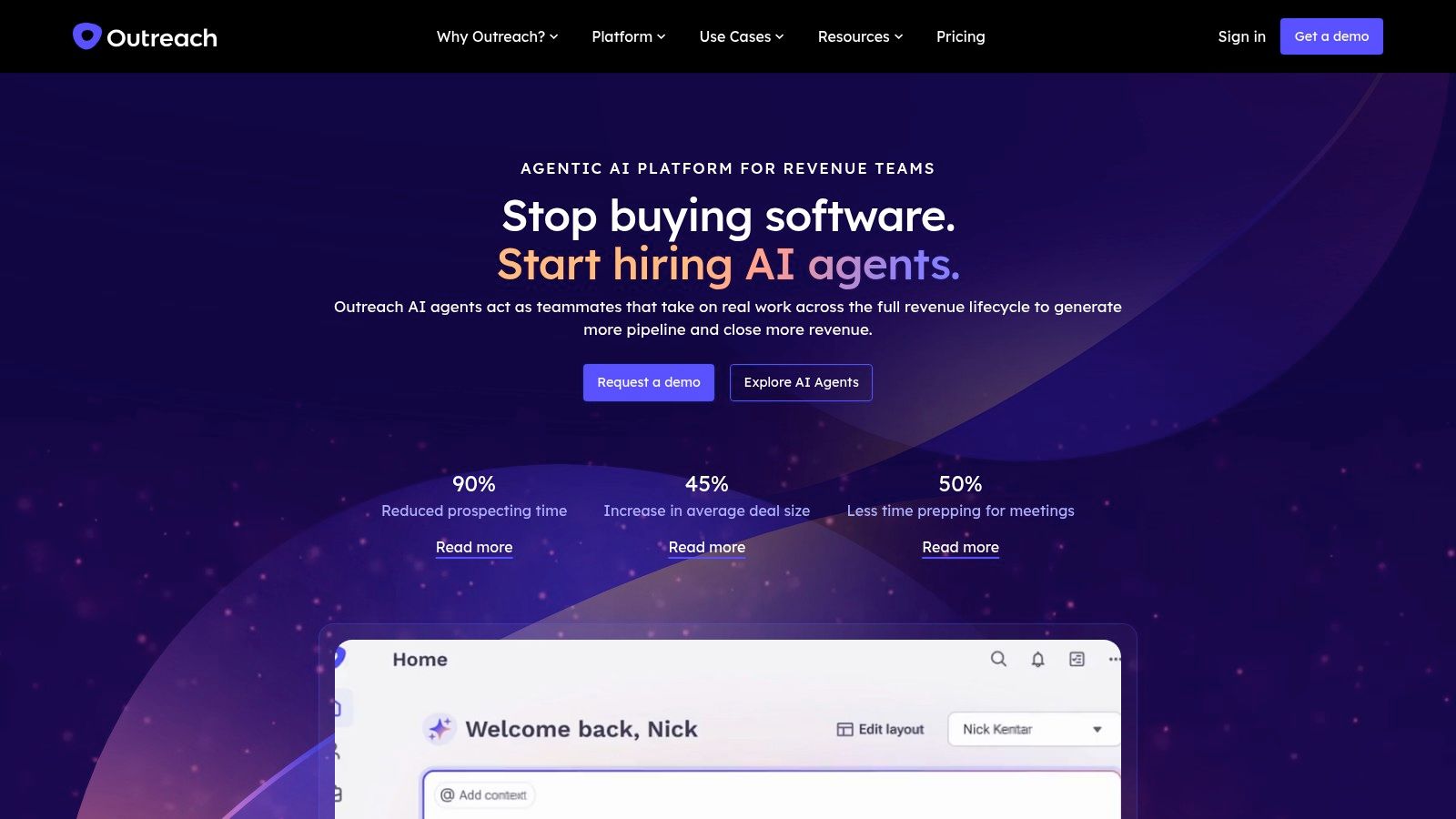
What you get for the seat price
- Multichannel sequences coordinate email, calls, LinkedIn steps, and rep tasks in one cadence.
- Conversation intelligence and coaching give managers recordings to review and coach against.
- Workflow automation and AI features support prioritization and drafting.
- Multi-rep coordination gives teams shared templates, rules, and reporting.
The trade-off is operational weight. Pricing is quote-based, implementation takes real admin time, and a two-person team is likely to use only a small share of the platform's capacity. Outreach also won't write your copy, clean your lists, or manage replies. It gives a team a stronger cockpit, not someone to fly the campaign. If you need a sales-execution platform, Outreach is a like-for-like option. If you need someone to run outbound, compare managed services instead.
2. Apollo.io
Apollo bundles B2B contact and company search, enrichment, sequencing, a dialer, tasks, meeting scheduling, and lightweight CRM features. That can replace separate tools for finding prospects and starting outreach, but it also means your team owns the setup and daily operation.
For a small team, the free plan offers a way to check whether Apollo's data fits your market before paying. Start with data quality, not workflow. Pull contacts that match your ICP, run them through your usual verification step, and review the results. If the data misses your target buyers, the sequencing features will not fix that.
What works: prospecting and outreach live in one system, with enough workflow to support a repeatable process. What needs checking: data coverage can vary by geography, and bundled data may not match a specialist provider in every market. Apollo's terms of use limit how its data can be reused, so check them before building anything on top of its data.
The larger decision is whether you need software to run outbound or a service to run it for you. Compare Apollo's seat costs with a managed, pay-per-close option using Ever Outbound's pricing page. Per-seat pricing leaves the operator's time out of the calculation, so include setup and ongoing execution when comparing it with sales engagement platform license costs.
3. Reply.io
Say you want a sequence that opens on LinkedIn, drops to email, and puts a rep on the phone only for people who reply twice. Reply.io is built for that shape: email sequences plus LinkedIn, calls, and SMS steps, with rep follow-up sitting on top of the automated touches.
The multichannel case is stronger than it looks. Gartner projected that 80% of B2B sales interactions would occur through digital channels by 2025, and reported buyers typically spend only 17% of their time meeting with potential suppliers while considering a purchase. One channel is a narrow bet.
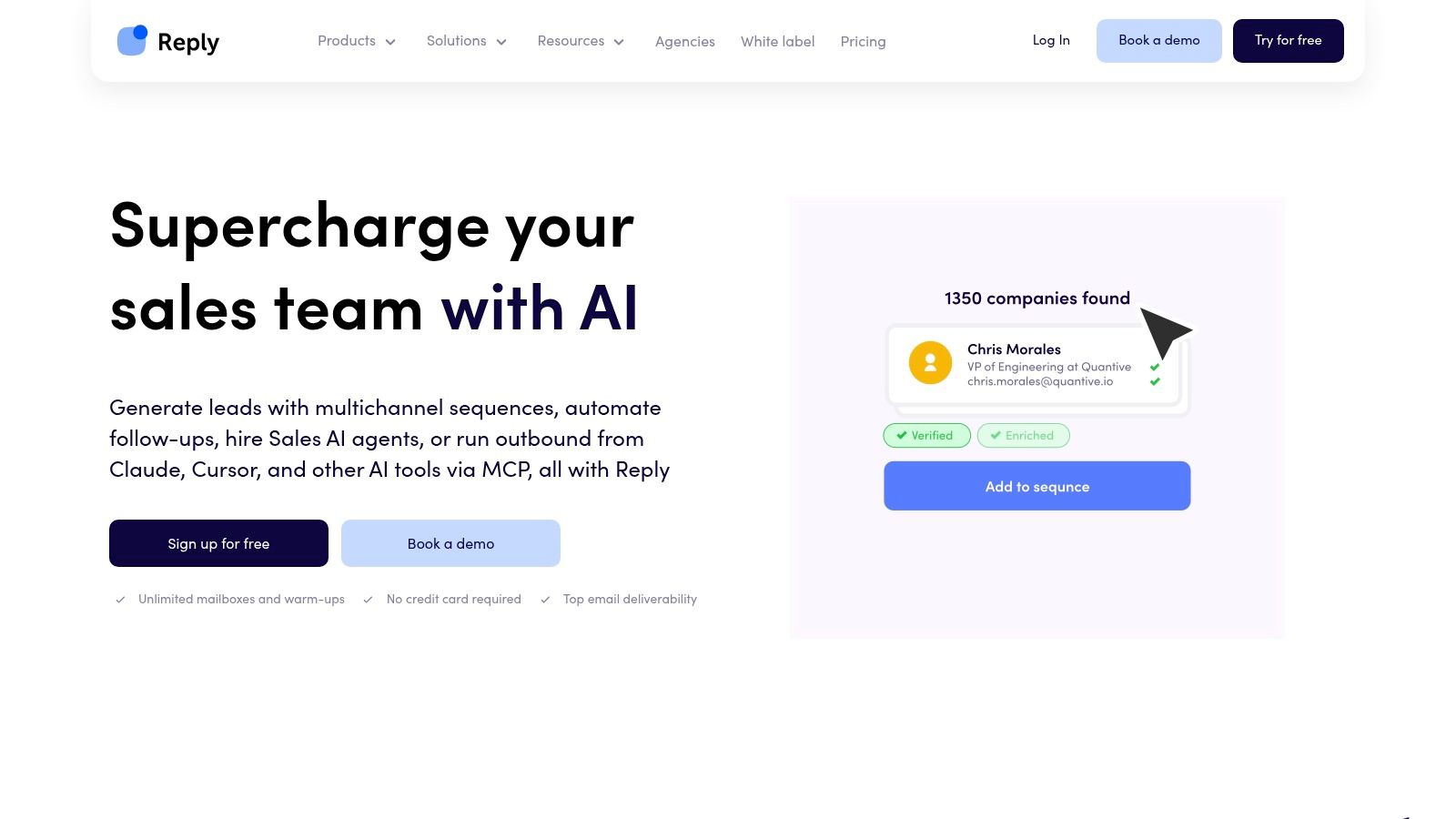
The parts that matter
- Email sequences with warm-up and deliverability tooling, so a new domain doesn't die in week one.
- LinkedIn, calls, and SMS steps on the multichannel plan, not bolted on through an extension alone.
- AI for sequence creation, personalization, and reply categorization, which saves drafting time but still needs a human read.
- A published email plan and a higher-priced all-in-one, plus an advertised 14-day trial, so you can cost it before a demo call.
The catch is administrative. Some channels and capabilities are priced separately, buyers need to confirm included channels, mailbox limits, and data allowances, and the number on the pricing page isn't always the number you pay. Map your monthly send volume first with the outbound volume planner, then pick a plan. Details are at Reply.io.
4. HubSpot Sales Hub
HubSpot Sales Hub is the only tool here where the engagement layer and the system of record are the same product. Contacts, deals, sequences, workflows, meeting scheduling, and activity reporting live in one place, so a reply that becomes a deal doesn't need to be synced anywhere.
That structural advantage is why CRM won the category. Gartner reported worldwide CRM software revenue reached $39.5 billion in 2017, overtaking database management software revenue of $36.8 billion and making CRM the largest software market, with 16% revenue growth forecast for 2018. Buyers stopped treating the customer record as an address book and started treating it as infrastructure.
Where it strains
Sales Hub is not cold-email infrastructure. Sequences and workflow automation sit on paid tiers, the entry price is deceptive once you add seats, and it is far less focused on high-volume sending than dedicated outbound tools.
Wins: activity stays attached to pipeline, reporting is real, and teams already in HubSpot get sequences without a migration. Costs: advanced automation requires upgrading, and nothing here researches prospects, writes copy, works an inbox, or books meetings. That work still belongs to someone.
If your outbound motion sits inside a wider sales enablement program, that's fine. If outbound is the whole motion, you're paying for a CRM to get a sequencer. Details are on HubSpot Sales Hub.
5. lemlist
lemlist stands out when personalization is part of the campaign, not a first-name token added at the end. It combines email sequences and a lead database with personalized images, video, landing pages, and conditional copy. The Multichannel plan adds LinkedIn automation, SMS, and calling steps.
Pricing is published by tier, with Enterprise pricing available by quote. Check the current plan details before comparing costs: the email-only option and Multichannel do not include the same capabilities.
Implementation can be quicker than with larger sales suites. G2's sales engagement category data reports roughly 0.5 months for lemlist implementation, compared with 4.6 months for Agentforce Sales. The same category data puts average payback at about eight months and user adoption around 72%. Those figures are category benchmarks, not a promise that a new sequence will produce revenue.
Good fit: teams that will use the creative personalization and want prospecting and sending in one tool. Poor fit: teams prioritizing high-volume cold email on a tight budget. Multichannel costs more than email-only, and enrichment or intent features may require separate credits.
Decide whether you need a sales-execution platform or someone to run outbound for you. If lemlist is the tool, draft the sequence before choosing a plan. The email sequence generator can help shape the message, and lemlist publishes its current product details.
6. Klenty
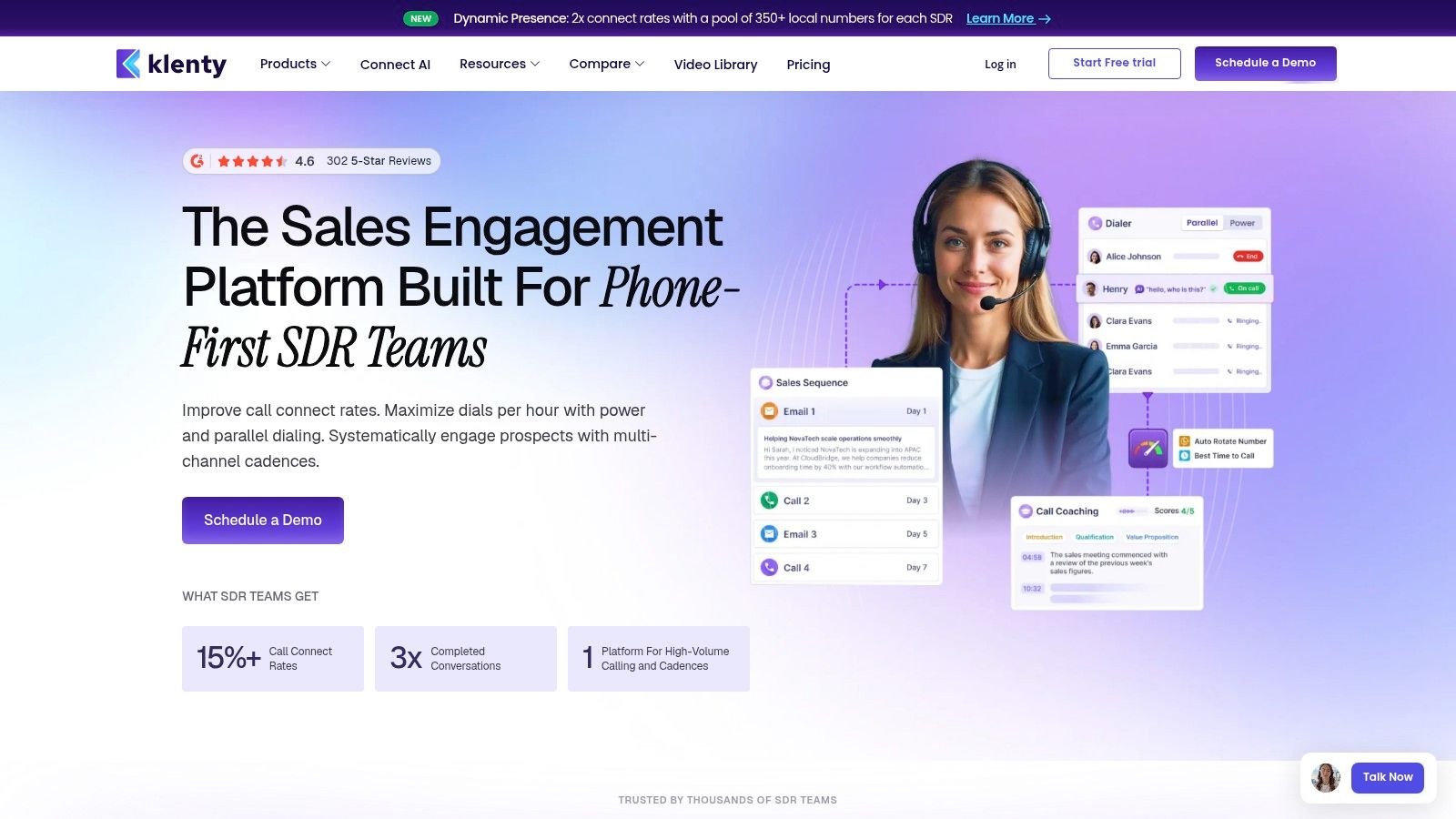
Klenty is what a lot of growing SDR teams buy before they can justify an enterprise contract. Email outreach, personalization, analytics, A/B testing, and sales-stage automation, with multichannel outreach and dialer features appearing on higher tiers.
Patience is the actual product here. Sopro's State of Prospecting 2025 report found 63% of B2B leads took at least three months to decide, while 20% waited more than a year before purchasing. A cadence that stops after four touches isn't a strategy, it's a coin flip. Klenty's value is keeping follow-up running without a rep remembering to do it.
A per-seat bill you can actually predict
Annual billing runs $50 per month for Starter, $70 per user per month for Growth, and $99 per user per month for Plus, with a dialer add-on listed separately. A 14-day trial needs no credit card, so testing costs nothing but time.
- Strengths: public prices, outreach and calling in one place, and enough automation to keep long cycles warm.
- Weaknesses: the useful capabilities cluster on upper tiers, per-user pricing compounds as you hire, and call coaching plus account-based features are dead weight for email-first teams.
Start on Growth and stay there until the dialer is the bottleneck. Plans are listed at Klenty.
7. Mixmax
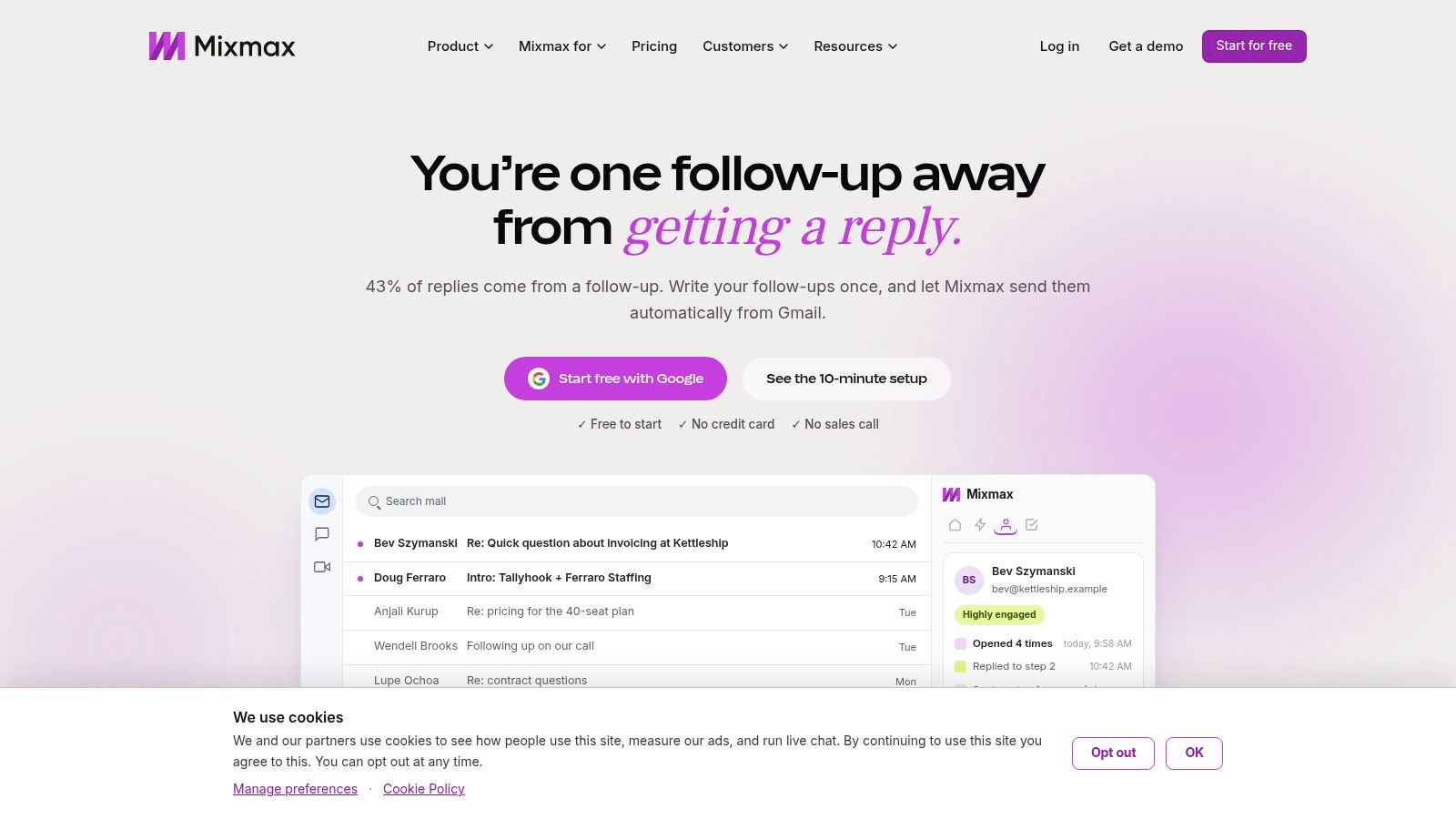
Mixmax doesn't try to be Salesloft with a smaller invoice. It lives in Gmail. Sequences, templates, tracking, follow-up automation, scheduling, and CRM syncing all happen inside the inbox your reps already have open, which removes the biggest adoption barrier in this category: a second place to work.
Adoption is a design problem, not a training problem. Add a tab, and half the team stops opening it by week three.
The tooling is solid for rep-led engagement. Sequences and follow-ups run on rules, scheduling kills the calendar email thread, and Salesforce and HubSpot syncing keeps activity where your pipeline lives. Multichannel sequences and tasks appear on eligible plans.
The limits are structural. Sequence-recipient caps apply on several plans, some features and capacity are plan-specific or sold as add-ons, and inbox-centered architecture is the wrong shape for high-volume cold email spread across dozens of mailboxes.
Annual billing is $29 per user per month for Inbox Copilot and $49 for Engagement Copilot, with a free tier after the trial, so the entry cost is low. That makes Mixmax right for a five-person advisory firm running warm-ish outbound at named accounts, and wrong for an agency sending tens of thousands of emails a month. Compare plans at Mixmax.
8. Smartlead
Smartlead is infrastructure, and it's honest about that. The product is cold-email campaign management across many sending accounts, warm-up, mailbox rotation, and agency-tier features like client workspaces and private infrastructure.
That focus matters because the sending rules got real. Google's Gmail sender guidelines require that, since February 1, 2024, senders emailing personal Gmail accounts configure SPF or DKIM authentication, maintain valid forward and reverse DNS records, and use TLS. Cross 5,000 messages a day to Gmail accounts and you need both SPF and DKIM, a published DMARC record, and domain alignment, with DKIM keys of at least 1,024 bits and 2,048 recommended where supported.
What you're actually buying
- Mailbox and domain management across many sending accounts, which is the whole game at volume.
- Warm-up and deliverability tooling, the difference between inbox and spam folder.
- Agency workspaces, CRM access, and private infrastructure on higher tiers, useful when you run campaigns for clients.
- A separate managed-service offer, which tells you the company knows the software is only half the job.
Plans range from $39 per month for Base to $379 per month for Unlimited Prime, so check current billing terms and inclusions before you commit. Remember what you're not buying: research, offer design, copy, or ownership of a booked meeting. Product details are at Smartlead.
9. Saleshandy
Saleshandy is the pragmatist's pick for agencies running cold email for clients. Sequences, mailbox rotation, warm-up, prospect management, and lead-finder credits in published plans, with white-labeling available on the top tier.
Compliance is the part agencies skip and later regret. The FTC's CAN-SPAM compliance guide requires accurate From, To, Reply-To, routing, and originating-domain information, no deceptive subject lines, a valid physical postal address, and a clear opt-out. Opt-out requests must stay processable for at least 30 days after the message is sent and be honored within 10 business days, with civil penalties of up to $53,088 per violating email and responsibility potentially extending to more than one party. Send for twelve clients and you own twelve sets of those obligations.
Annual billing is $34 per month for Starter, $76 for Pro, and $149 for Scale, with a 7-day trial that makes it easy to test.
Where it fits: agencies and lean teams who send heavily and don't need a coaching suite. Where it doesn't: Starter caps you at one user with low prospect and email volumes, CRM integrations and team collaboration sit behind tiers, and this is an outbound execution tool rather than a done-for-you meeting-booking service. Plans are listed at Saleshandy.
10. Instantly
Instantly's pitch is cold email that doesn't need a consultant to run. The product splits into separate categories for outreach, leads, and CRM, so you buy the component you need rather than a monolith.
That split cuts both ways. A team that only needs campaign execution gets a lighter tool. A team that needs data, sending, and a record has to add up three line items and read the allowances carefully, because the headline price usually covers one category.
Separate products don't reveal a hidden bill. They reveal the workflow you never mapped.
The category structure is worth understanding before you sign. Outreach covers sending and campaign management. Leads covers the data side. CRM is the record. If all three are in play, price them against an all-in-one before deciding.
What Instantly doesn't do is the thing most programs fail at: research that produces a real reason to reach out, copy that earns a reply, and inbox management when sixty people answer in the same week. It's also not a replacement for Salesloft's coaching and enterprise governance, so phone-heavy teams should verify fit.
Check your domain before your first campaign with the email deliverability checker. A burned sending domain makes every other decision irrelevant. Product details are at Instantly.
Salesloft Alternatives at a Glance
A tool comparison only answers half the buying question: do you need a sales-execution platform, or someone to run outbound for you? The table compares the software options on price, access, fit, and trade-offs. For done-for-you service, compare those costs with the work your team would otherwise own.
| Item | Starting Price (Listed) | Free Plan or Trial | Best For | Limitation |
|---|---|---|---|---|
| Outreach | Quote-based | No free plan listed | Large teams with structured sales workflows | May be excessive for small teams; no done-for-you campaigns |
| Apollo.io | Free plan available; paid plans available | Free plan available | Small and midsize teams combining prospecting and outreach | Data coverage varies; may not replace specialized tools |
| Reply.io | Paid plans available | 14-day trial | Teams coordinating multichannel outreach and rep follow-up | Some channels and capabilities cost extra |
| HubSpot Sales Hub | Free tools available; paid plans available | Free tools available | Teams already using HubSpot CRM | Advanced features require paid tiers; costs can rise |
| lemlist | $55/month for Email; $87/user/month for Multichannel | 14-day trial | Teams coordinating multichannel outbound | Multichannel costs more; some data features need extra credits |
| Klenty | $50/month for Starter | 14-day trial; no credit card required | Growing SDR teams combining email and calling | Key features depend on tier; per-user costs can grow |
| Mixmax | $29/user/month for Inbox Copilot | Free tier after trial | Gmail-focused teams needing email engagement and scheduling | Recipient caps apply; less suited to large-scale cold email |
| Smartlead | $39/month for Base | No free plan listed | Agencies and teams managing high-volume cold email | Focused on email infrastructure, not full sales execution |
| Saleshandy | $34/month for Starter | 7-day trial | Teams and agencies running outbound email campaigns | Entry plan has user and volume limits |
| Instantly | Paid plans available | Free plan available | Teams focused on cold-email campaign execution | Separate products can make total cost less obvious |
A listed price is only a starting point: compare what each plan includes with the workflow you need. Sales-execution platforms support internal teams; they still leave prospecting, messaging, campaign management, and reply handling on your plate. If you need a provider to run that work, assess done-for-you options separately rather than treating them as another software row.
Platform or Pipeline and What It Actually Costs
Choose a sales tool based on who will operate it and what work still needs doing after purchase.
- Ten or more reps with a manager and a RevOps owner: Compare enterprise suites such as Outreach and Salesloft. Seat price is only part of the cost; administration and ongoing management take time too.
- Two to six sellers running their own outbound: Consider Apollo, lemlist, Reply.io, or Klenty. Match the data to your market and the channels to your offer.
- An agency sending on behalf of clients: Smartlead or Saleshandy may fit when mailbox management and white-label reporting matter more than coaching views.
- A team already using HubSpot: Sales Hub keeps engagement activity on the deal record rather than in a separate spreadsheet export.
Before sending, set up the infrastructure and process. A separate sending domain helps protect your primary domain if a campaign has problems. Connect mailboxes, warm them up, and increase sending volume gradually rather than treating the tool's maximum as a safe starting point. Poor setup can create a sender reputation problem that no platform can fix.
A subscription covers the software, not necessarily the work. Research, copywriting, and reply handling still need an owner, including when a prospect replies outside normal working hours. Salesworx's breakdown of Salesloft alternatives argues that a useful comparison should ask who operates the system, not just which tool has the longest feature list. Its total-cost framing separates software alone, software with an internal operator, and fully managed execution. That distinction is more useful than comparing seat prices in isolation.
Automation is now common across sales platforms, but results still depend on how it is used. Salesforce's 2024 survey found that 83% of sales teams using artificial intelligence reported revenue growth, compared with 66% of teams not using it. The practical takeaway is to assign ownership to the process behind the automation, rather than expecting a software toggle to create pipeline on its own.
Ever Outbound offers a managed alternative for teams that need execution, not another platform to operate. Its plans start at $97 per month plus a 5% commission on closed deals, with the first 2 closes commission-free. The Scale plan costs $497 per month plus the 5% commission and includes 5,000+ prospects reached monthly and multi-mailbox sending infrastructure. Most commercial risk sits with Ever Outbound because its commission depends on closed deals, though the monthly plan fee still applies. If you prefer an in-house option, use hire sdrs to compare the cost of adding an SDR.
Software answers the tooling question. Pipeline answers the capacity one.
Ever Outbound handles B2B client acquisition for agencies, consultants, SaaS companies, and other B2B service businesses, including prospect research, personalized copywriting, deliverability, and reply handling. Its managed service books qualified sales calls, while the client platform tracks campaigns, replies, and calendar bookings. For teams whose bottleneck is execution rather than software, Ever Outbound Inc. is one option to compare.